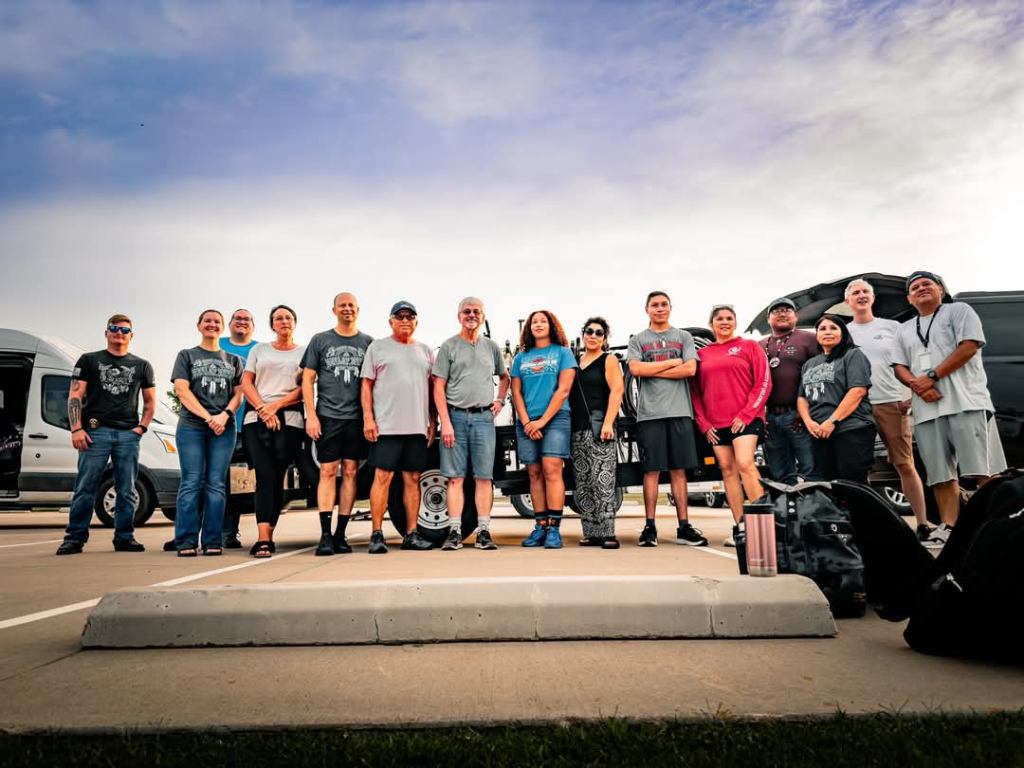
Dr Padraig Kirwan gives us an insight into his first few days riding with the Choctaw Nation’s 2025 Trail of Tears Bike Team.
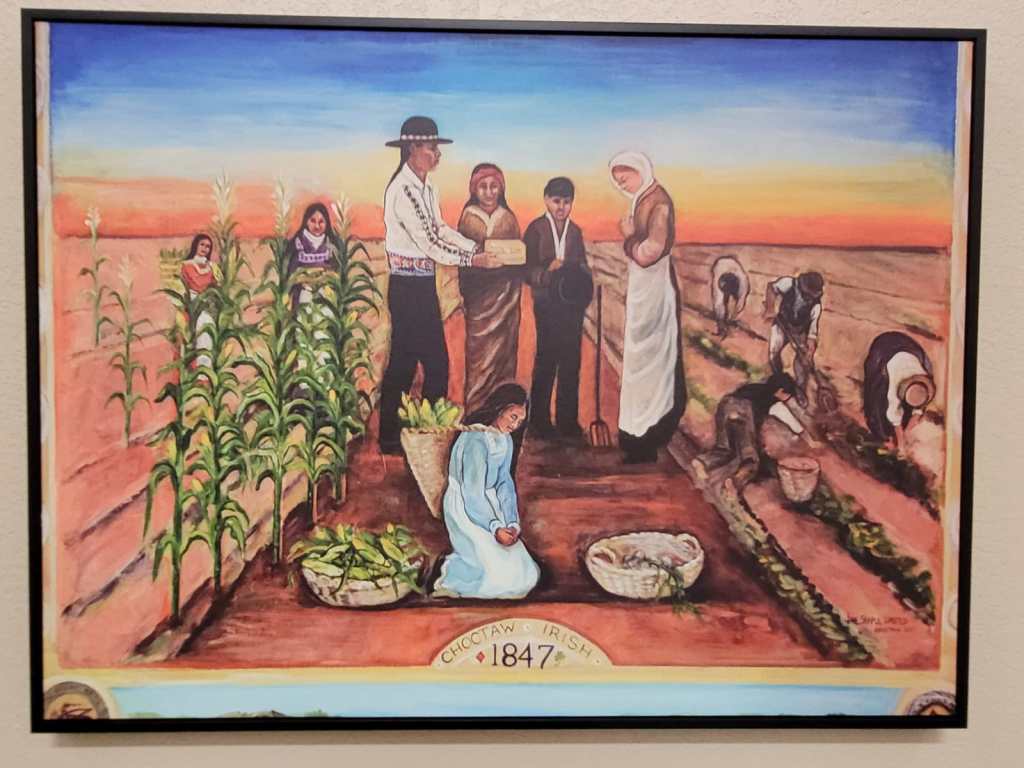
Days 1-2: London to Dallas and onwards to Oklahoma and Mississippi
May 14-15
The first few days of the 2025 Trail of Tears Bike Ride were a case of trains, planes, automobiles…and bikes. Leaving home in South London at a brisk 5am, I headed for Dallas, Texas, via Heathrow. From Dallas, it was a two-hour drive to Calera, Oklahoma, where the Trail of Tears Bike Team were planning to gather at 7am the next morning at the Choctaw Cultural Center.
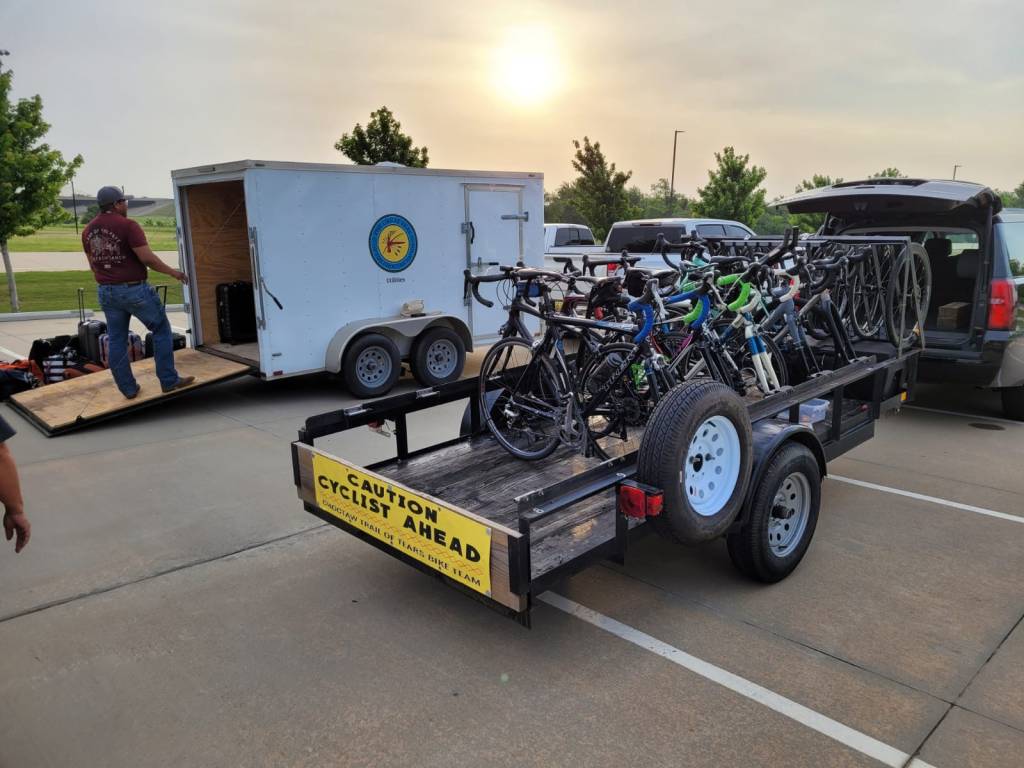
Day 2 was also a preparation day, of sorts, with the crew (riders as well as the all important Support and Gear folks) loading up several vehicles before we began the long drive to Dancing Rabbit in Mississippi. Miles were covered by car before the team even started the ride. Reviewing the distance between Calera and Dancing Rabbit was a powerful reminder – if one were needed – of the sheer distance covered by the Choctaw in the 1830s, when the tribal ancestors walked from their homelands in the south-east to Indian Territory in present day Oklahoma.
Day 4: On the bike (and more)
May 18-19
Before leaving Philadelphia for Ridgeland, Mississippi, our team were up at 5:30am to load and prepare the bikes. We dived into a quick breakfast before rolling out at 6:30am…right into the waiting arms of a massive thunderstorm that brought with it some sheet lightning and near-zero visibility!
Only 7 miles into the ride, the team were huddled together at a petrol station, waiting for the weather to blow over. Happily, the chills brought on by the cooling rain and wind soon dissipated, fading into oblivion as the route brought us along the Natchez Trace, a trail that had been used for centuries by Indigenous peoples of the region. Passing through Lobutcha Creek – named after Holbocha/Ahlohbichi (boiled food or food made warm) – there were smiles at the fact that this tributary of the Pearl River was named after things that we were all craving at that stage: warmth and good food. The team chatted about the fact that the Choctaw, along with the Chickasaw and the Natchez, traded and shared lands in this region for centuries, and that during the Treaty of Fort Adams in 1801, the Choctaw Nation granted Americans the right to use the Trace road to pass through the Nation’s territory. As with the time spent at Nvnih Waiya yesterday, the morning’s ride brought us through lands that have always been life-giving. These lands are central to the collective memory of all the Nations who cherished a common relationship to the Trace. This was also the first day in the saddle for most of us; although grateful to finally start working our way through the 500 miles we’ll be covering, we were also pretty happy to finally reach Vicksburg, MS.
Days 5 & 6: So begin the Arkansas Days
May 18-19
Making our way from Vicksburg on the morning of May 18, we set our sights on Monticello (knowing all the while that a long day on the bike from Camden to Hope, Arkansas still awaited us the next day. Wise-cracks and puns about reaching the city of Hope wrote themselves. A seriousness accompanied us too, as we considered the terrain that we were covering. We had covered some distance from our starting point at the tribal homelands, yet we knew that we had a long way to go before reaching Durant, Oklahoma.
Any mental rendering of how this journey would have been on foot, during winter, and often while battling malnutrition and disease, is surely hard to muster. Nevertheless, as you travel slowly on the land, picking out spots in the countryside off to the side of the various byways we were riding on, you can’t help but imagine. Throughout my time on the ride I have been fortunate to learn so, so much from the entire team of Choctaw riders and associates of the Choctaw Nation. On these days, as the miles passed beneath us, I found myself thinking too of Famine routes in Ireland that brought the starving from Mayo, Cork, Roscommon, and so many other places to Dublin. And I feel the presence of the Irish and Irish Americans who also passed through the lands I travelled through: some looking for new lives; some trying to forget the horrors of the life they’ve just fled; and some looking for gold, land, or other forms of ‘wealth.’ Many roads, and many paths were taken by these immigrant settlers – the legacies of which we are still grappling with today.
At the end of Day 6, we finally reached the moment in our journey commemorating the history of the Trail of Tears in which we acknowledged and remembered an episode in which the townspeople of Hope helped the Choctaws who passed through. Providing blankets, food, and help, Hope’s population recognised the suffering that they saw before them, and did what they could in that moment.
 Sharing Lands
Leave a comment