
As the 2025 Trail of Tears Bike Team reach the end of this year’s ride, Dr Padraig Kirwan reflects back on the journey.
Day 7: Arriving in Oklahoma
May 21st
Although we’d swapped Hope AK for Broken Bow by the end of the day’s ride and transfer, I’m happy to report that any possible connotations associated with the latter town’s name hadn’t transpired; we were excited to be back in Oklahoma, and everything was functioning well at that point. Moreover, we were staying at Choctaw Landing, one of the newest properties owned and managed by the Nation.
Our trip during the day had found us in Yakni Vlhpisa (Measured Land) – which is also known as Ultima Thule – as well as Eagletown. The first of these names, Yakni Vlhpisa, was a noteworthy trade town on the Choctaw/Arkansas border, and Ryan Spring from the Choctaw Nation’s Historic Preservation Department explained to us the various names for the location; the Choctaw name came from the tribe’s reference to the equipment used by the Americans to measure the official boundary line. As is so often the way, the American settlers were either unable or not predisposed to pronouncing Yakni Vlhpisa and so renamed the town Ultima Thule. That name means the ‘edge of civilisation’ (and may be familiar to fans of Edgar Allan Poe).
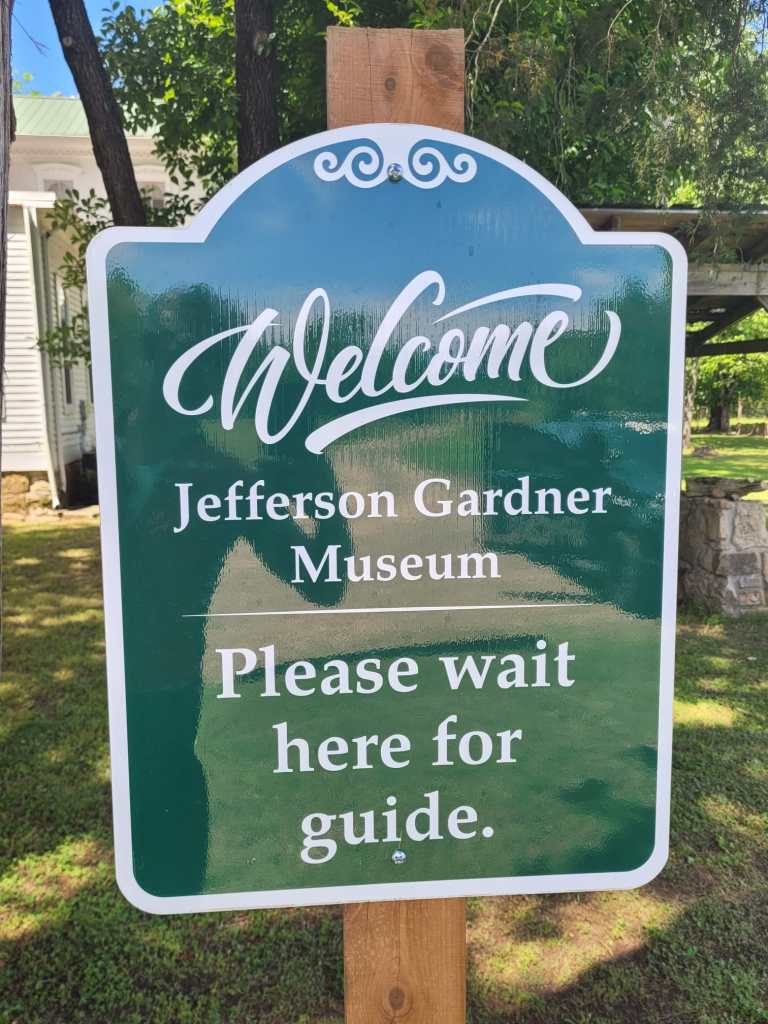
Next, we stopped at Osi Tvmaha, or Eagletown, which was a prominent site during the Removal era, and thereafter. A strong Choctaw community developed in Eagletown after 1832, and many of those who had originally travelled along the Trail of Tears route lived there for several years. Over time, the Choctaw County Courthouse, a post office, schools, and other offices and buildings were established. The Bike Team were also given a guided tour of the Chief Jefferson Gardner Mansion and Museum, before heading west again to Broken Bow and Choctaw Landing. Apparently, Broken Bow is a popular spot for music gigs and socialising. There wasn’t much appetite for that, however; as we had covered 55 miles that day. With more to come tomorrow, none of our party were thinking of swapping cycling shoes for dancing shoes…
Day 8: Oklahoma…continued!
May 22
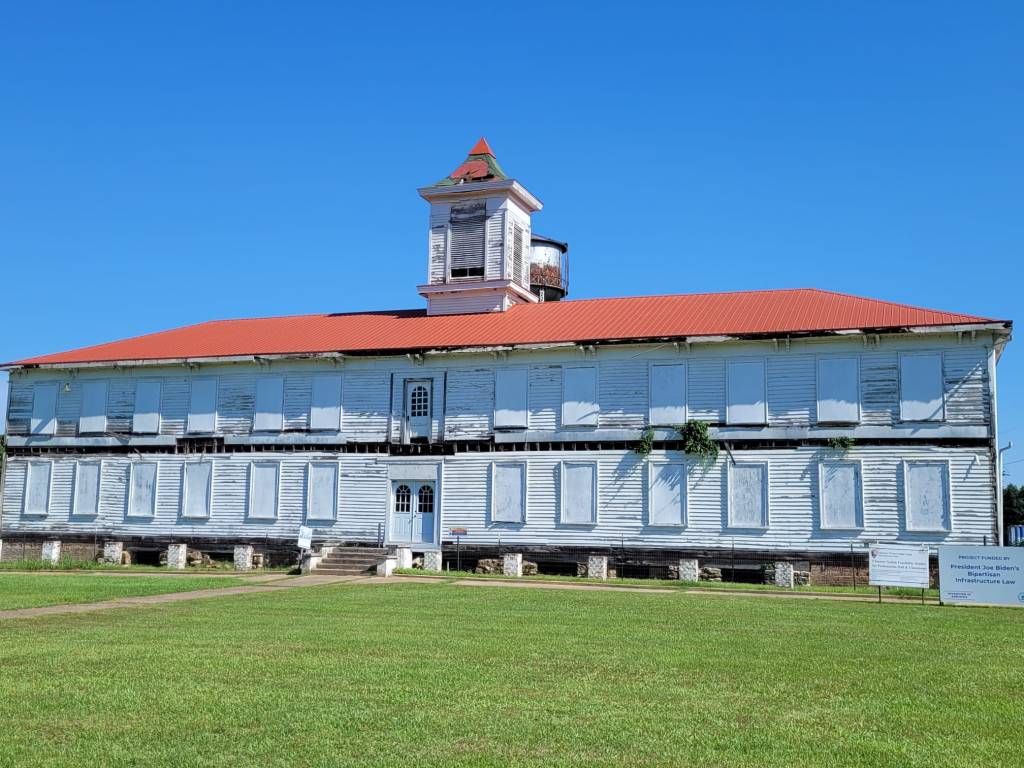
In many respects, each day on the bike ride brought with it a new highlight. Day 8 was no different, and following a short 24-mile spin, we arrived at Wheelock Academy. Welcomed by Dawn and Sandy Sandridge, as well as their colleagues at Wheelock, the team arrived as Vangelis’s ‘Chariots of Fire’ played in the distance. A delicious lunch, which included Choctaw Heirloom Sweet Potato Squash (cucurbita moschata), chicken salad (possibly the best tasted by many of us), and other gorgeous salads, was followed by a tour of the museum and grounds.
Dawn, Cultural Research Associate at the Academy, explained to us her family’s long connection with Wheelock, and spoke about her mother and grandmother’s time as boarders there. We learned a great deal about the role that the institution played in the education and guardianship of young women throughout the 1800s and into the 20th century, and Dawn elaborated on the ways in which the Academy was self-sufficient – it housed its own dairy and farm, and the community did everything from craft making to laundry as well as attending classes. The challenge posed by the age of the original buildings was a topic that we riders asked questions about, and Dawn spoke to us about the considerable and ongoing task of maintaining this historic site.
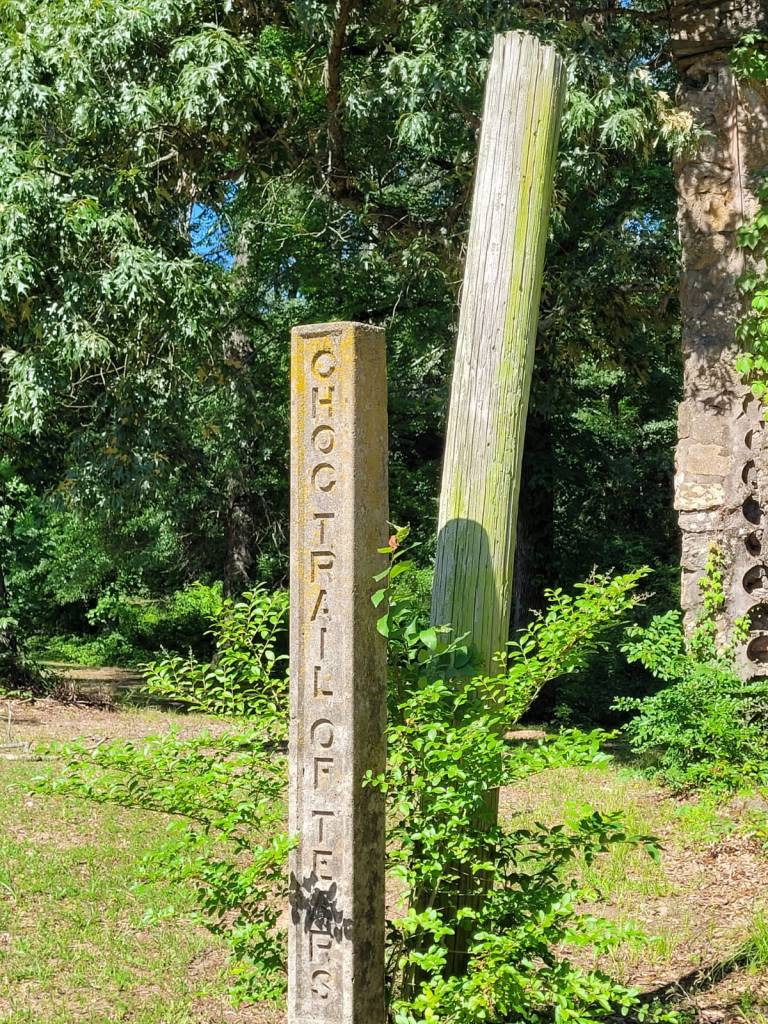
For me, two of the most intensely moving moments of the whole week came at Wheelock. Firstly, the peacefulness of the land seemed to make a simple stone marker reading “Trail of Tears” even more profound; placed in the middle of what now appears as a large lawn, the marker sits in the middle of the old roadway, and its starkness both punctuates and punctures the calm and tranquillity of the wider setting. Simultaneously a memorial, a reminder, and a way-marker, the stone became for me a palpable reminder of the extent to which history permeated our very contemporary travels by bike. After that, we visited the Wheelock Rock Church. The fact that this church was built in 1846, and dedicated in 1847, struck me; 1847 was, of course, the year that the Choctaws at Skullyville collected the money that was sent to Ireland.
To consider the ways in which Choctaw culture was changing and rebuilding in the wake of Removal on one side of the Atlantic, even as Irish culture was being sundered on the other side, was one thing. To sit in the church at Wheelock and envisage the thoughtfulness of my fellow cyclists’ ancestors, as well as the loss and suffering of both the Choctaw and the Irish in the 1830s and 1840s, was, quite honestly, upsetting. Any hope of remaining composed evaporated when Rachel and Rebeckah Boykin joined Dawn, her sister Sandy, and Alyiah Meyers to sing several Choctaw hymns in the church. It felt as though time and poise collapsed simultaneously.
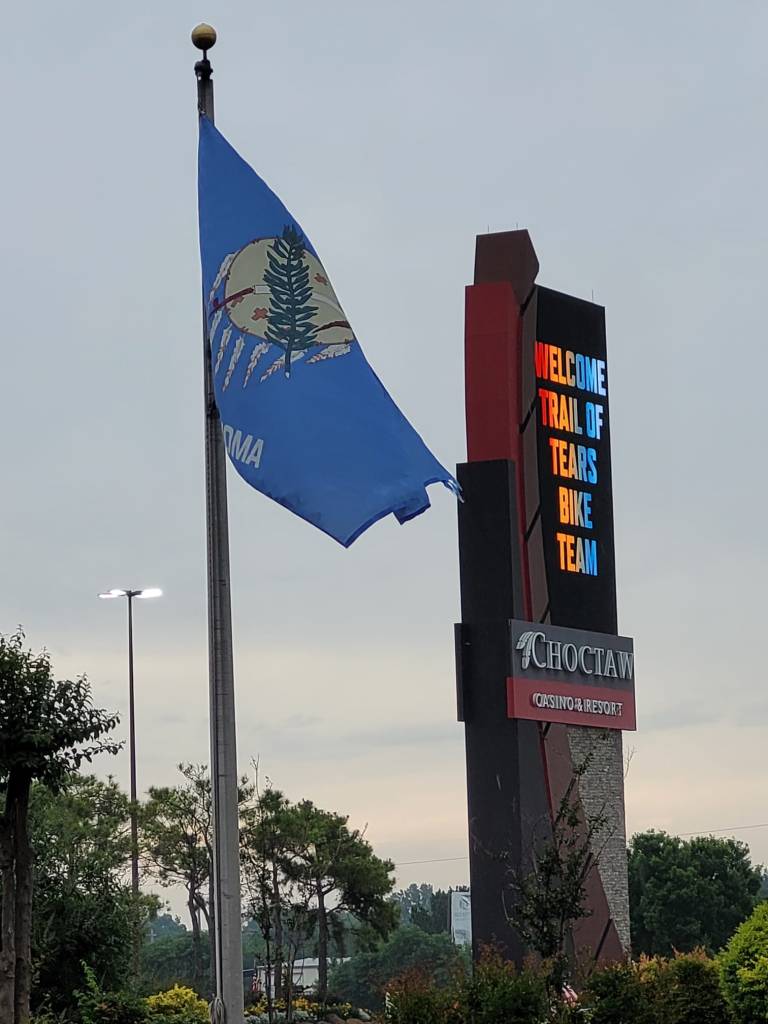
The day ended with a massive welcome for the team at the Choctaw Casino & Resort, Grant, where the staff greeted us with a guard of honour and a special message on their huge roadside sign. Although we knew that we’d landed back in Oklahoma the day before, we truly knew that we’d arrived by the end of Day 8!
Day 9: Hugo to HQ
May 23rd
Building towards this moment of return, the 10-day trip culminated in a happy and exciting ride back to Calera. Travelling through Boswell and Bokchito (Bok Chito, which means Big River), the riders had the benefit of Ryan’s deep knowledge once again, as he explained to us the nearby waterways, including Hvnvn Vbi (Hanubby Creek), and their connections to the famous Red River and Blue River. As with the rhizomatic structures of the river cane that we spotted days earlier, the thoughts of tributaries, flows, and streams of connection, served as a powerful reminder of the extent to which the cycle links places and people.
At the small town of Blue, the team was honoured to be joined by Gary Batton, the 47th Chief of the Choctaw Nation of Oklahoma. Ready for action on arrival, Chief Batton spoke to the cyclists about their journey, the meaning of the annual ride, and the importance of servant leadership in today’s world, before gamely leading the group for several miles – the final stretch back to Tribal Headquarters. Arriving at HQ, the team were greeted by scores of well-wishers, a KTEN TV news crew, and several local newspapers, as well as a massive cake and lunch buffet. We’d made it. Restored, refreshed and buoyed by the fun of the final welcome, we travelled across to the Choctaw Cultural Center, where Ryan treated us to the last of his tours. The entire team learned about the structures of tribal council and more about Choctaw culture and history as we walked through the world-class exhibitions. From a recreation of Choctaw mound structures right through to a video demonstration that shows how important stickball still is to the Nation in 2025, the Center contains a real wealth of information. We completed the circular route that we’d undertaken by gathering at the firepit, which at the heart of building, was surely one of the most apposite endings ever.
My sincere thanks to: the organisers, Tina James, Rebeckah Boykin, and Jana Boykin (Jana also rode the route with us); the Support and Gear team, Christy Sapulpa (Cultural Events and Historic Preservation Department), Wa-tta Nowa James (Tribal Transit), and Adam Brian (Cultural Events and Historic Preservation Department); my fellow riders, Alyiah, Colton, Steve, Shery, Bryanna, Roldon, and William; Ryan Spring of the Tribal Historic Preservation Department; and to Christian, from the Choctaw Nation Lighthorse Police.
Go raibh mile maith agat, mo chaired. The bond endures.


Leave a comment