
Our co-PI, Professor Gillian O’Brien’s research for ‘Sharing Lands’ took her to Chicago, where she visited the Field Museum to see how a new generation of cultural practitioners are tackling histories of misrepresentation alongside communities themselves. She reflects on her visit and the ‘Native Truths: Our Voices, Our Stories’ in our latest blog post.
In March 2025 I visited the Field Museum in Chicago to see the Native Truths: Our Voices, Our Stories exhibition as part of my research for the ‘Sharing Lands’ project. The Field Museum is one of the largest natural history museums in the world and the Native North American Hall had long been criticised for its depictions of Native cultures. Opened in the 1950s the exhibition remained largely unchanged for 70 years.
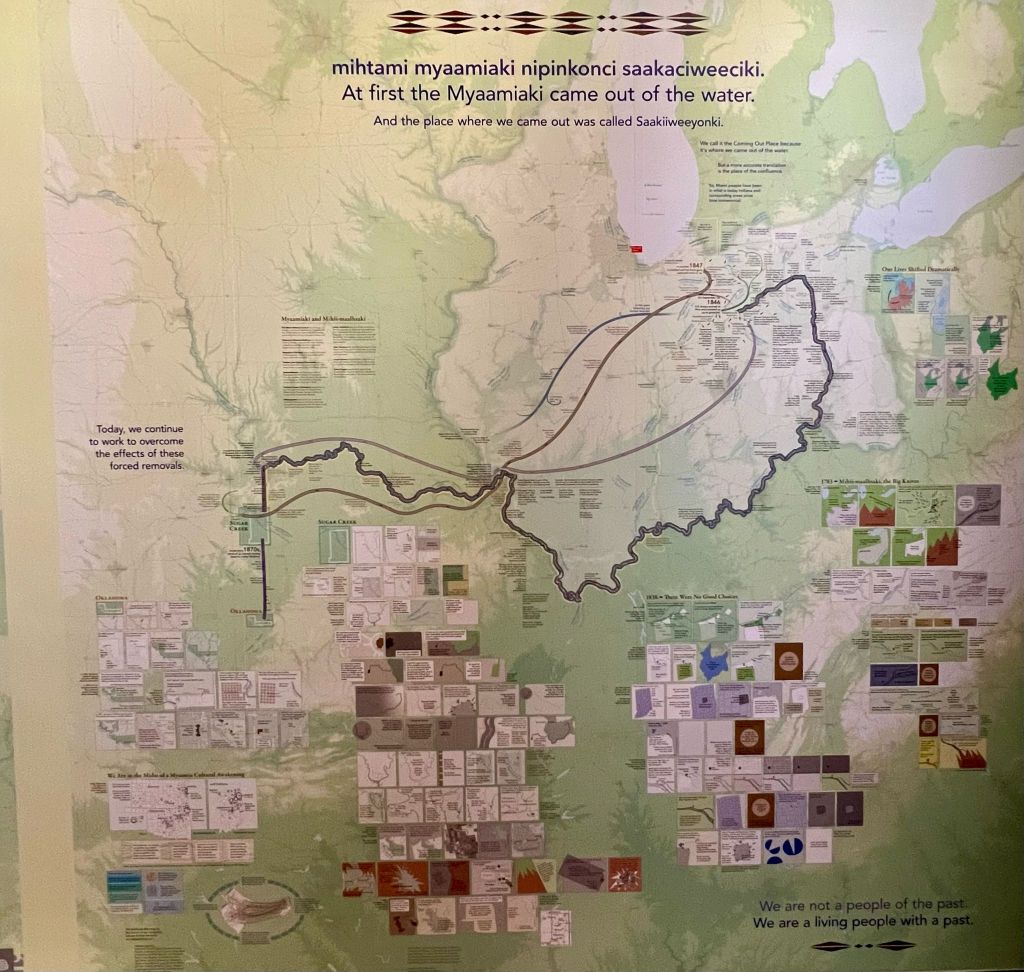
Map detailing the history of broken treaties, forced relocation and survival of the Myaamiaki-Miami people
Native Truths, which replaced the Native North American Hall, opened in 2022, marking a radical change from the historic curatorial practice of the Field Museum. The exhibition was created with the guidance of an advisory council of 11 Native American scholars and museum professionals and in partnership with 130 collaborators representing over 105 tribes. The purpose of Native Truths is to share stories told by Native people of self-determination, resilience, community and continuity. The exhibition is not just concerned with the past but looks to the present and the future. In the exhibition visitors can engage with contemporary ceramics, music, murals, games, and sports. Native Truths also features the photographs, voices and written words of Native artists, Elders, community leaders and writers.
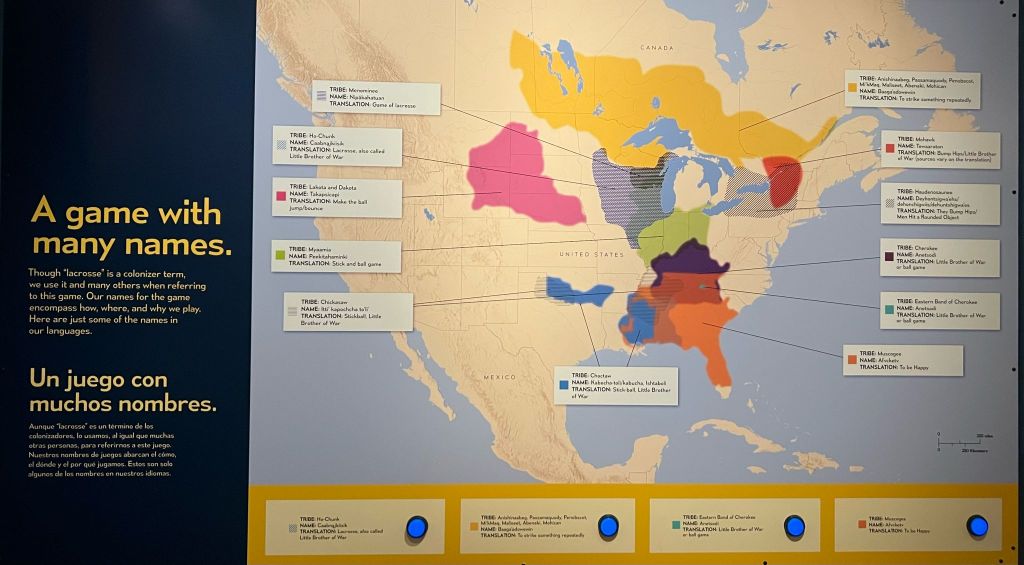
Map from the lacrosse/stickball room showing the Choctaw Tribe marked in blue
The exhibition is broken down into six primary rooms connected by hall spaces which also contain objects. Each of the six rooms revolves around a specific practice or concept; these include the music of contemporary Sicangu Lakota hip-hop artist Frank Waln, lacrosse, and a Pawnee Earth Lodge. At the core of the exhibition are the lives of Indigenous people who live in what we currently know as the city of Chicago. As visitors enter the exhibition they are reminded that they are on Native land. Signage in the gallery reads:
As you move through the museum and out into Chicago, remember you are on the ancestral lands of Ojibwe, Odawa, Potawatomi, Myaamia, Hoocąk, Menominee, Meskwaki, Sauk, Iowa, Otoe, Inoka, Kickapoo, and Missouri Peoples
Signage at the Native Truths exhibition
Native Truths is thought-provoking, reflective and encouraging to see. It stands in stark contrast to other historic exhibitions in the Field Museum including Ancient Americas and the Hall of the Northwest Coast and Arctic Peoples which are very much in need of re-interpretation.
A notice reads:
This Hall reflects the Field Museum’s former curatorial practice. These practices spoke on behalf of the cultures and people related to items on exhibit, often using harmful language and misrepresenting Indigenous people. We plan to co-create a new exhibition with the communities whose heritage is displayed here…
Many of the exhibits in those galleries have either been removed or the cases have been covered and replaced with notices which read:
These cases have been covered in consideration of ongoing legal and ethical reviews related to the display and repatriation of certain cultural items subject to the Native American Graves Protection and Repatriation Act.
This federal legislation was passed in 1990 and requires museums to return many remains of Native ancestors and sacred objects to tribes. Updates to the Act in 2024 also require consent from descendants and/or affiliated Tribes in order to continue to be displayed.
Amendments to curatorial practice and cultural care like the work being undertaken at the Field Museum is certainly encouraging to see as we think about our own relationships to objects, ancestors, and collections that are far from home through our research for ‘Sharing Lands’.
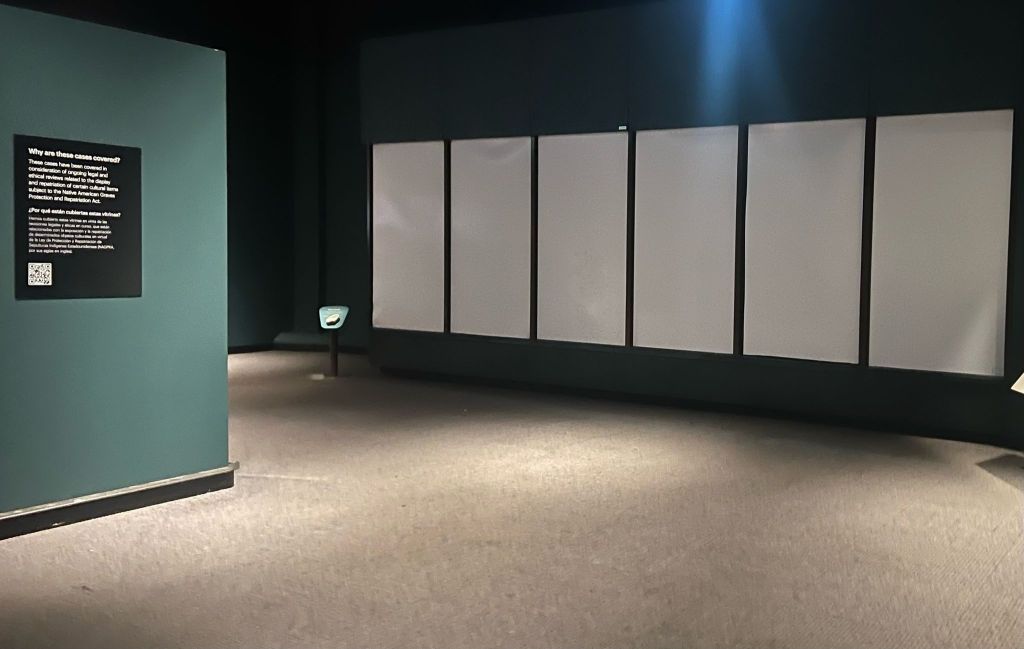
Part of the Ancient Americas exhibition with cases covered

 Sharing Lands
Leave a reply to James Carmody Cancel reply