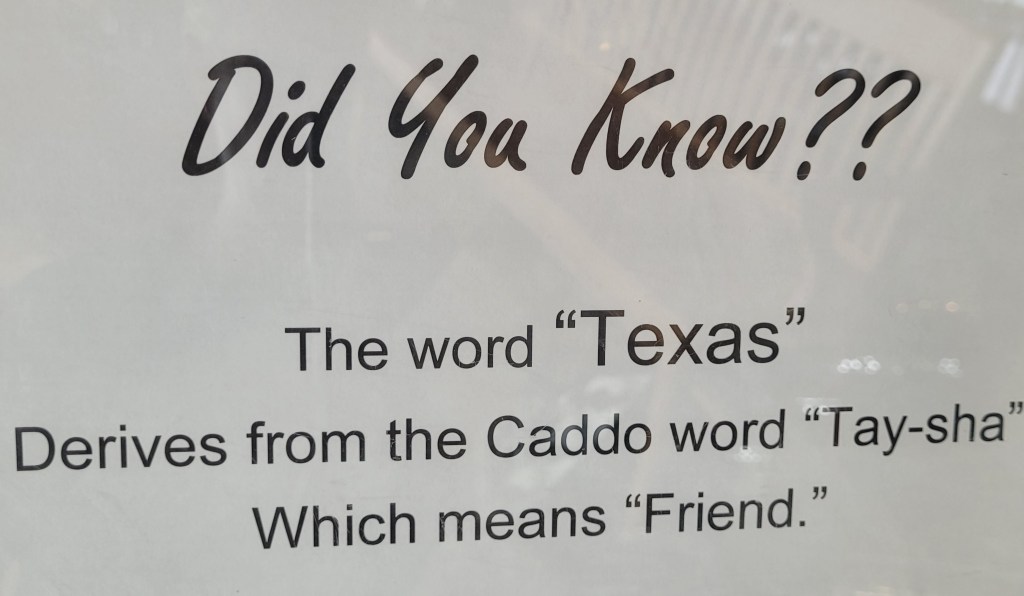
One element of the Sharing Lands project has been a consideration of questions around inward migration, expansionist principles and policies, and the question of what it means for non-Choctaw – and non-Native peoples – to inhabit tribal lands. At the same time, we’ve also been considering not only the establishment of the Choctaw Nation of Oklahoma, but also the relocation of the Choctaw from the tribal homelands in Mississippi. With that, we’ve become increasingly mindful of the rich influence and deep impact that the 39 Oklahoman tribal nations have throughout the entire south-central region – including Texas.
The role of the Irish in the settlement of Oklahoma and Texas, the presence of an Irish Consulate in Austin, and the meeting points that exist in this region today, prompted the Sharing Lands team to include the ‘Lone Star State’ in the site visits planned over the life of the project (the single star is said, by some, to represent the solidarity and unity of Texans, even as it speaks to a particular form of radical – often revolutionary and violently-formed – independence). As such, we’re glad we spent time in Texas; bordering a large swathe of the Choctaw Nation’s Tribal Boundary, it’s a part of the United States that flags the interweaves, connections, and cross-border exchanges that exist between the tribes and their neighbours on one level. On another level, various aspects of the state’s history, and certain elements within its foundational narrative, prompt truly challenging and discomfiting questions about the differences between Indigenous concepts of place-making, belonging, and tribal sovereignty on one hand, and forms of ownership, settlement, and individualism on the other. Along these borders there are certainly moments of friendship and moments of friction.
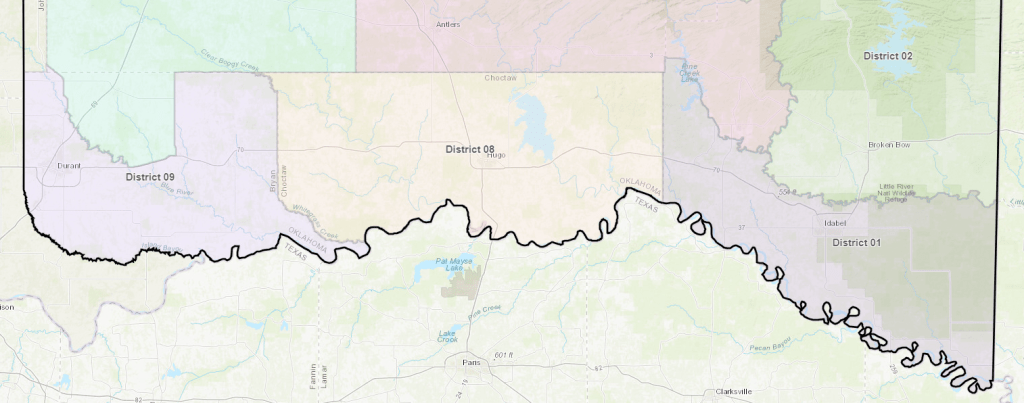
To delve a little further into some of these questions, our research team visited several historical sites, cultural institutions, and communities across the state a while back. At the heart of that journey was the goal of locating, identifying, and considering sites where the very idea of ‘sharing lands’ was somehow foregrounded or (con)tested. Below are just some of the places and people that prompted us to think more deeply.
Amon Carter Museum of American Art
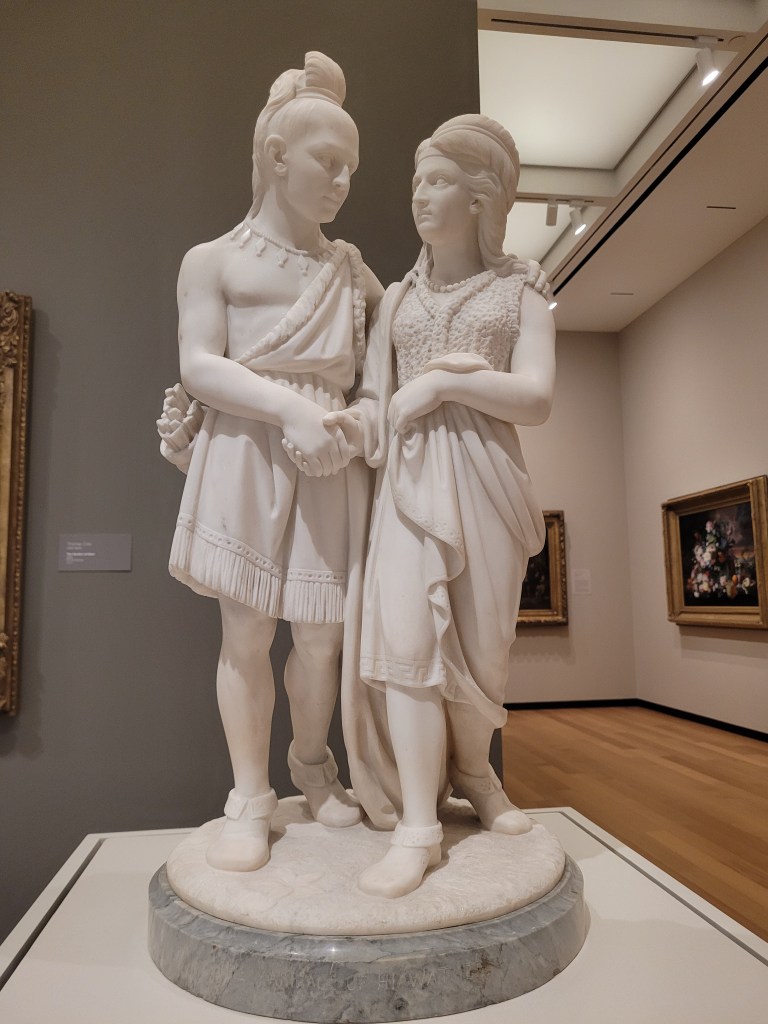
At the Amon Carter, we were delighted to see the work of Edmonia Lewis. Recently described by Artnet‘s Sarah Cascone as “the first Black and Indigenous artist born in the U.S. to chart a path to international acclaim as a sculptor,” Lewis “created classically inspired works that championed the social causes of the day, including emancipation and Indigenous sovereignty.” Research with numerous communities has revealed that as well as having African ancestry, Lewis’s “connections include Tuscarora heritage…Six Nations at Grand River…and she is [also] Credit River First Nation.” Her sculpture, ‘Marriage of Hiawatha’, which is on show at the Amon Carter, reframes several tropes and preconceptions; the level of detail evident in the figures’ traditional dress is stunning, given that the piece is sculpted in marble. The curators have also gone to great lengths to contextualise the aesthetic and cultural significances of the interventions that Lewis made in the 1800s. Simultaneously, the piece surely reminds us of the extent to which Longfellow’s ‘Song of Hiawatha’ has dominated the cultural landscape, and done so in a manner that often overshadowed the stories – and artistry – of tribal nations. Such dominance is now, thankfully, ending.
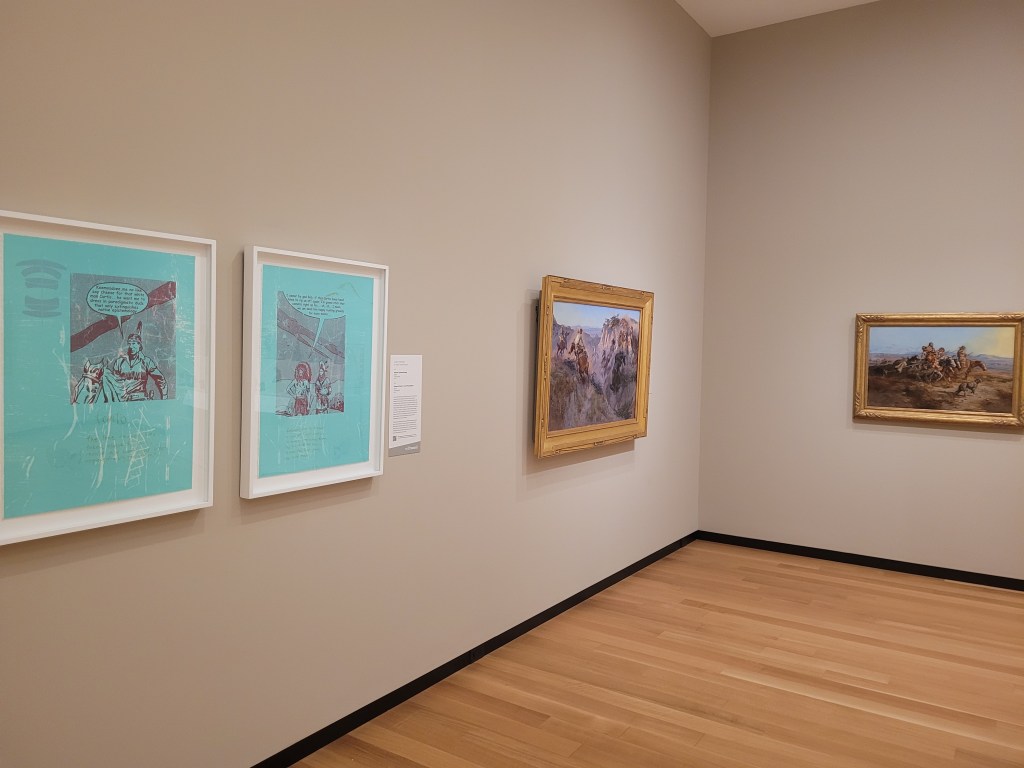
The decision to display McNeil’s ‘Native Epistemology’ (2004) and ‘Edward Curtis’ Last Photograph’ adjacent to Charles M. Russell’s ‘Wild Horse Hunters’ (1913) and ‘Indian Women Moving’ (1898) is both inspired and brilliantly provocative!
Austin, TX
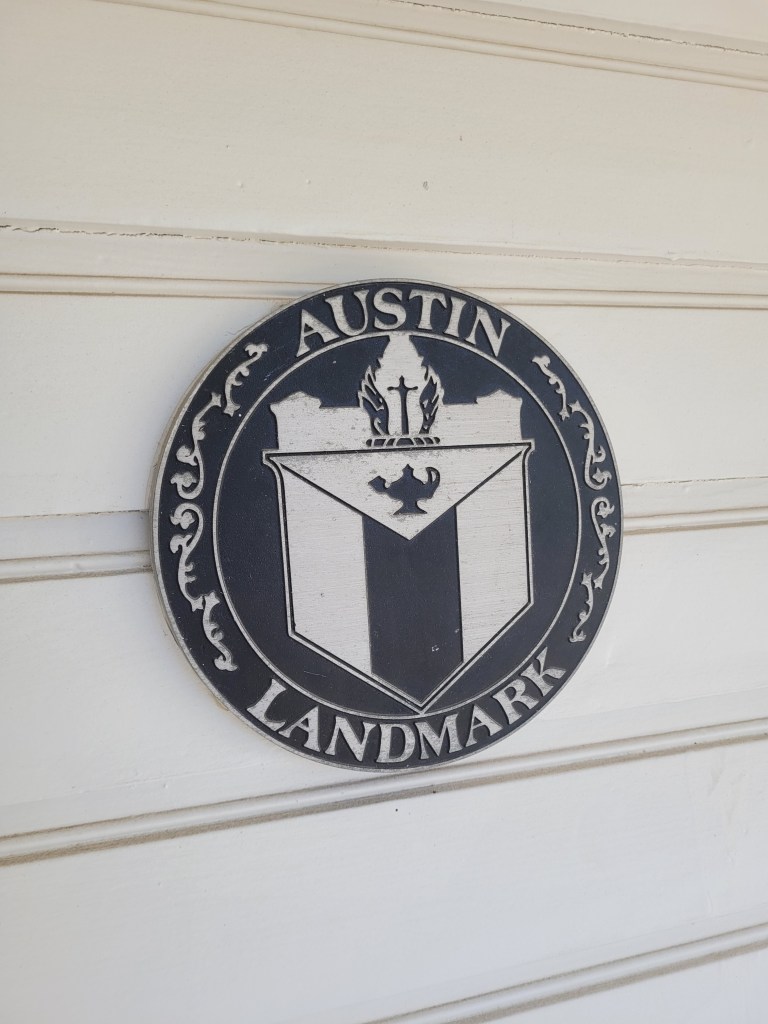
The Limerick-Frazier House is a landmark that we’d wanted to visit ever since passing through Austin briefly in 2023. The house was designed by Joseph Limerick, who was born in 1798 and left Ireland in 1850. Later, it was bought by John and Laura Allman Frazier in 1905.
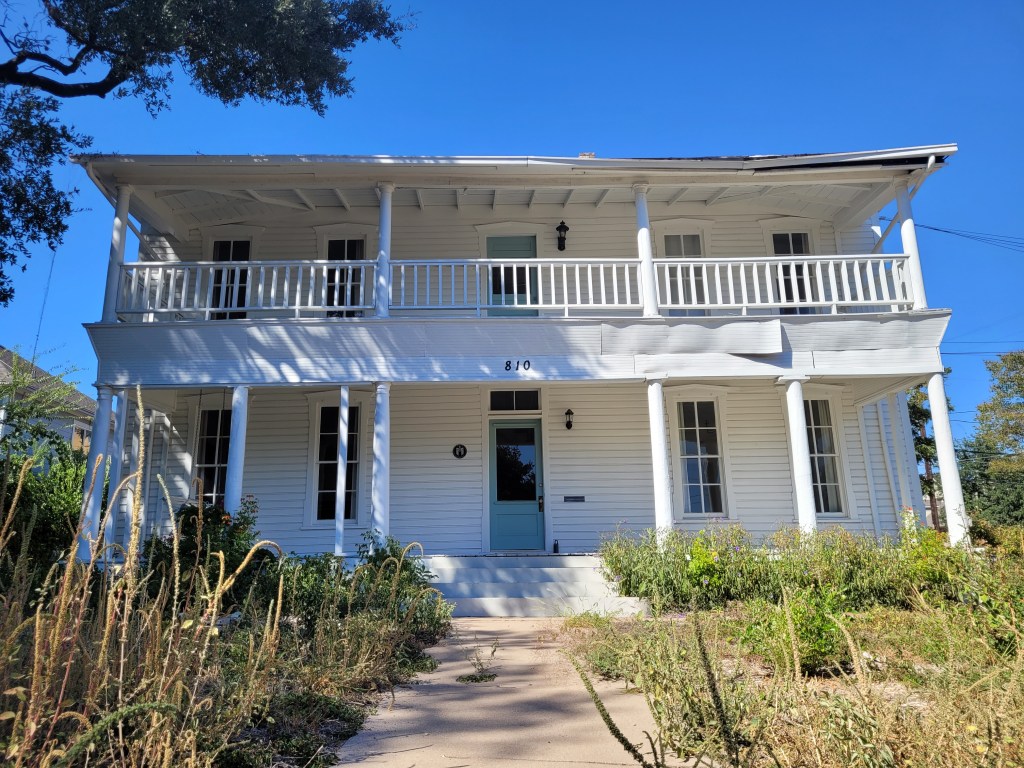
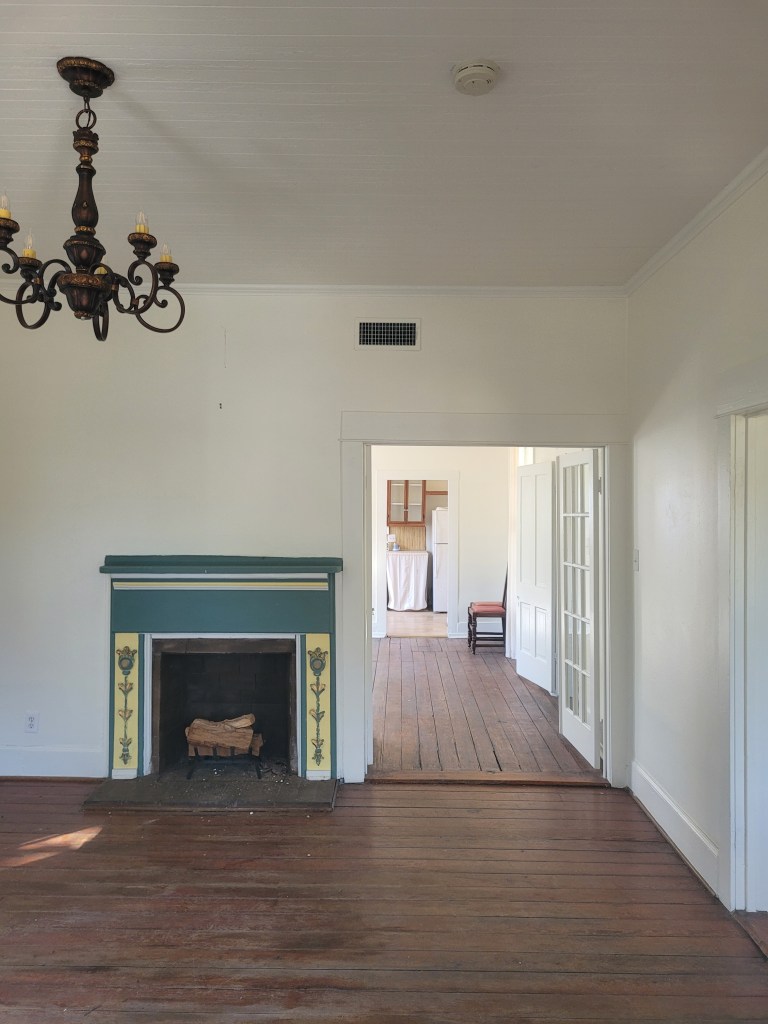
A professor at Samuel Huston College, John was a prominent educator. He and Laura opened their home to travellers during the Jim Crow era, when white-owned lodgings almost invariably turned Black customers away; their home featured in the Green Book. Laura continued this work after John’s death. The house needs some care today and it was for sale when we visited. Although that is the case, it surely stands as an intriguing and powerful reminder of the interwoven and rich histories found in Austin.
The Briscoe: some ‘Yes’, some ‘No’
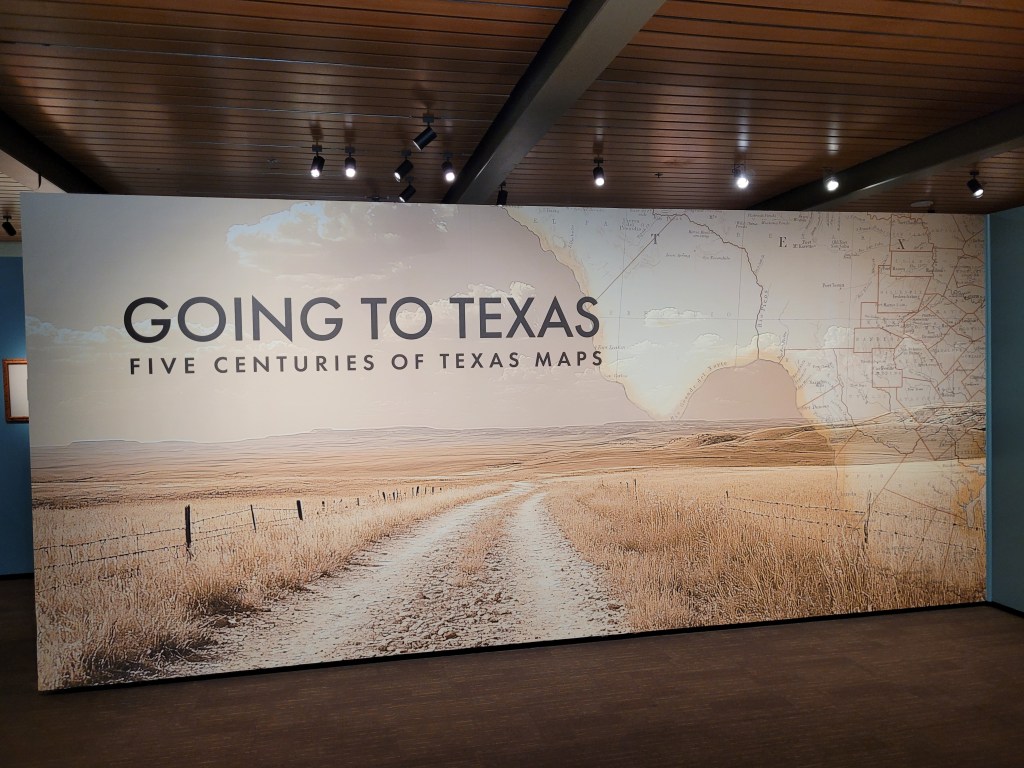
Some careful and attentive display panelling and cataloguing is in evidence at the Briscoe Western Art Museum, and many artifacts in the collection were a joy to see. We were especially drawn to the contextualisation of certain elements within the temporary collection that was on show when we visited (‘Going to Texas: Five Centuries of Texas Maps’), and appreciated the Briscoe’s bid to include voices from all communities; the invitation to comment, directly, on the act of sharing space, land, and identities was particularly impressive, and we loved the fact that this invitation took the form of inviting visitors to collectively add to – or possibly even rethink (rather than redraw) – one large map via the collation of multiple small ‘maps’ of the state. Even for younger visitors, this sense of contributing to a diverse, carefully charted, and broadly arranged tapestry of places and people must surely have been arresting and exciting as well as educational. ‘What Texas do you see?’; ‘How has that been shaped?’; ‘How are we in dialogue (or disagreement)’; all of these questions – and many more – are prompted by this display.
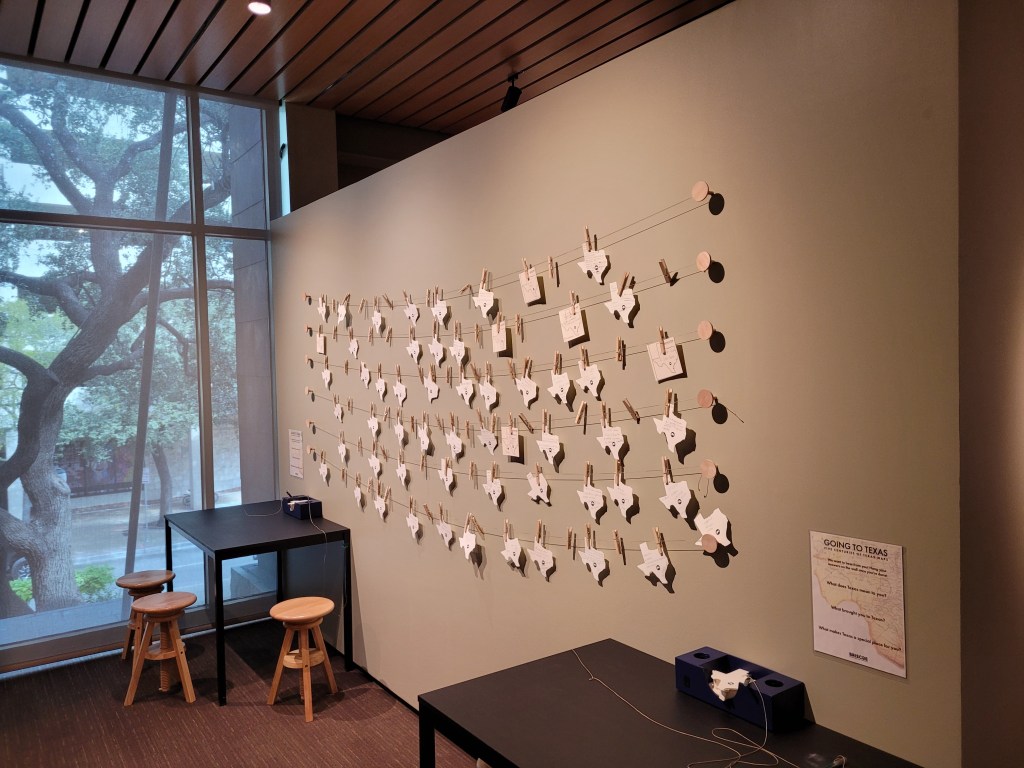
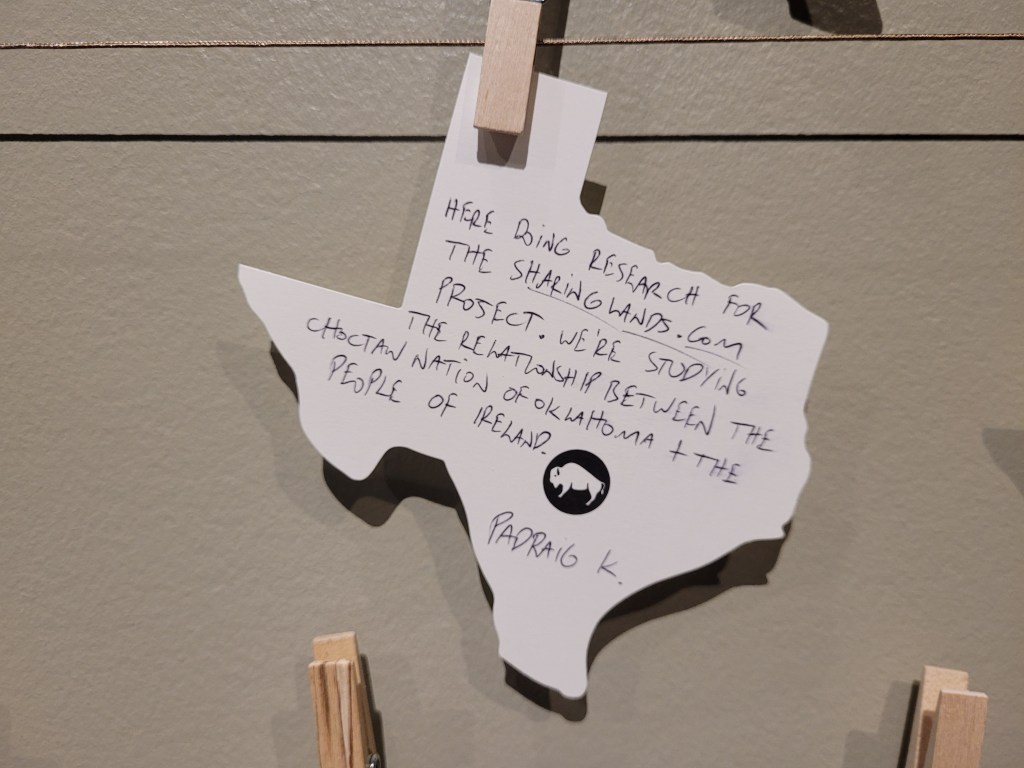
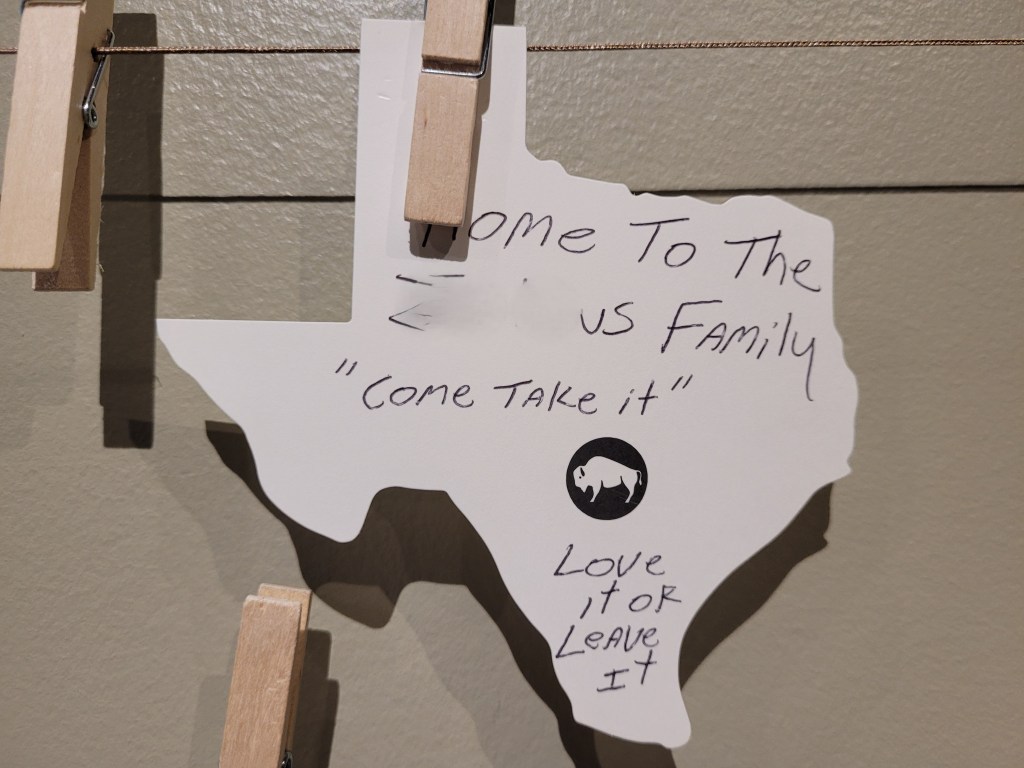
Inevitably enough, the comments provided were sometimes of a certain tone and style, and chimed with various political, cultural, and even historical narratives around Texan statehood and identity:
More usefully, perhaps, several of the explanatory panels dotted around the museum certainly did attempt to unpack much of the state and region’s difficult and dark historical moments:
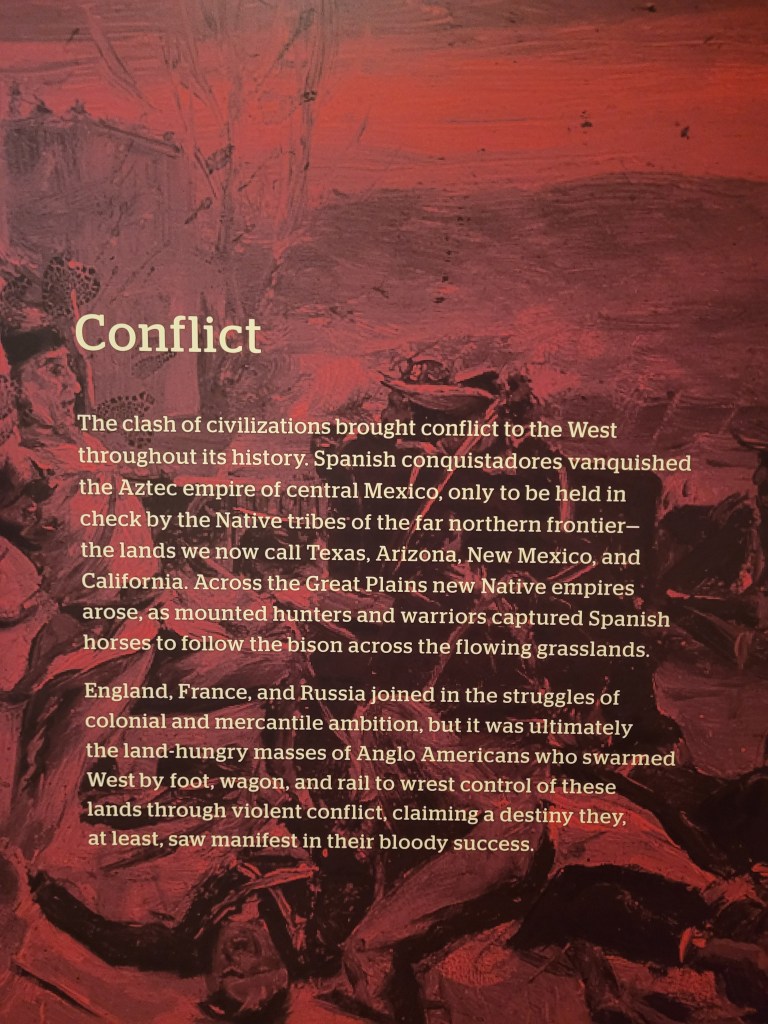
Taking these opportunities to rethink prevailing narratives is vital. Indeed, it is something of a shame that even more work hasn’t been done by the Briscoe around the question of introducing and interpreting artwork by contemporary non-Native creators in the instances when the art in question seeks to represent tribal peoples or histories; some more detail about the inspiration for Glenna Goodacre’s ‘Basket Dance’ out front of the museum would be welcome, for instance.
‘Peace Circle’, Grapevine
This particular trip ended in Grapevine, TX, following a journey via Corpus Christi and Texas Hill country. That journey warrants a separate blog of its own (we’ve much to say about Irish-born empresarios and Texas Parks and Wildlife’s signage at the Enchanted Rock State Natural Area).
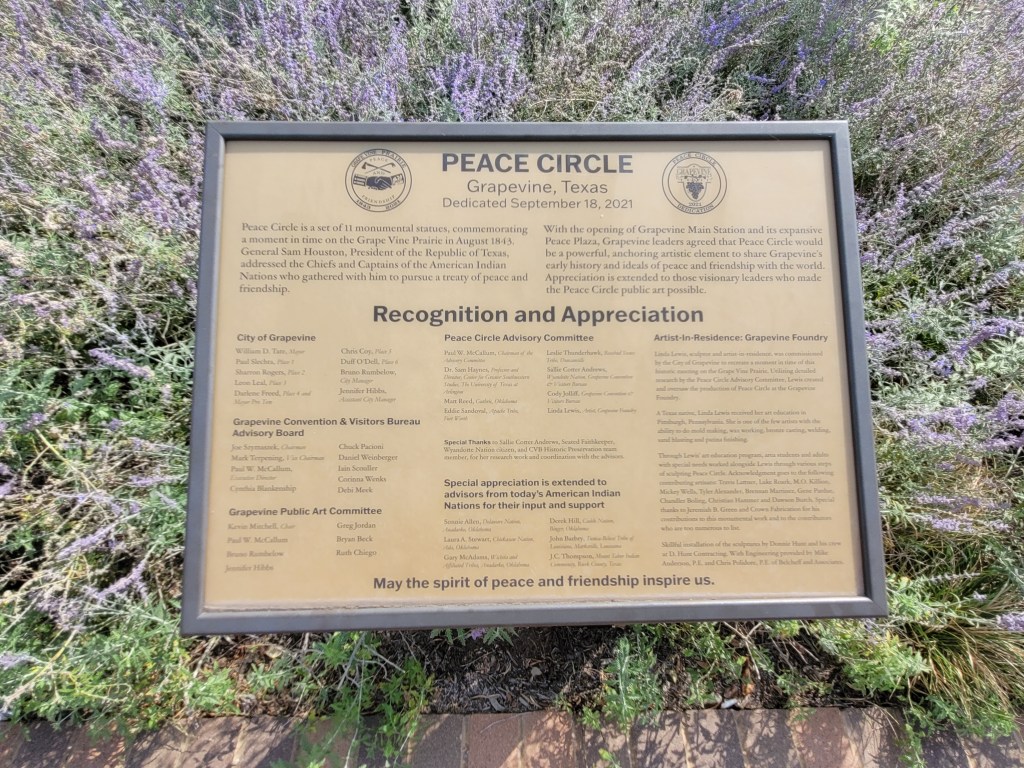
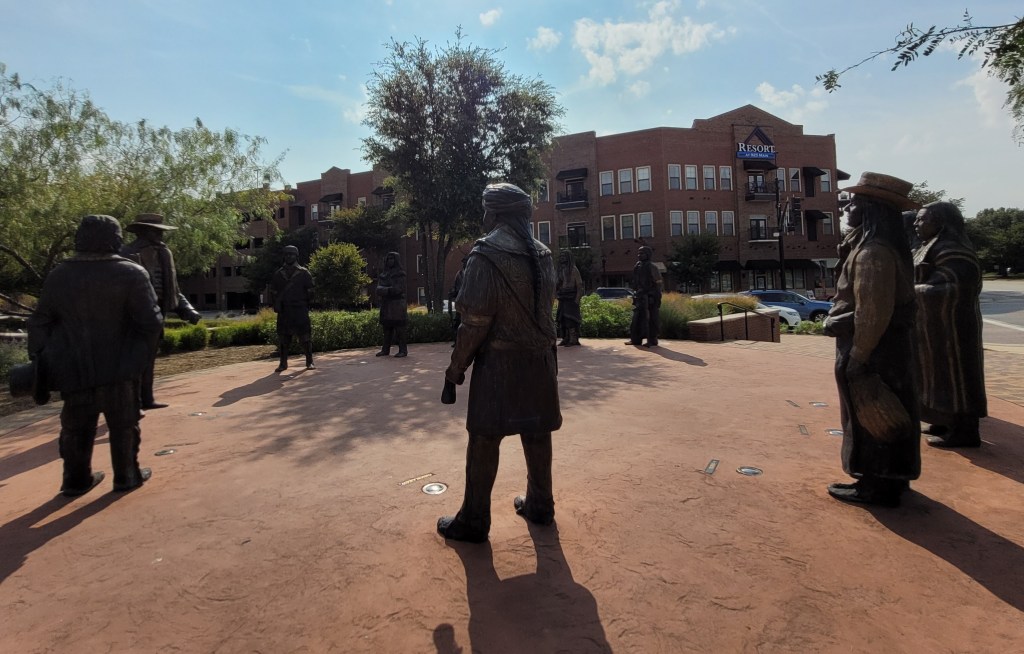
While visiting the ‘Peace Circle’ that acknowledges the signing of the Bird’s Fort Treaty Ratification Proclamation (1843) the Sharing Lands team considered once again the complex layering of history in Texas. The Bird’s Fort Treaty was signed following 10 Nations’ negotiations with Sam Houston: Delaware, Chickasaw, Waco, Tawakoni, Keechi, Caddo, Anadarko, Ioni, Biloxi and Cherokee. This putative “treaty of peace and friendship” came in the wake of the ruthless, expansionist campaigns of Mirabeau Buonaparte Lamar, who served as the second president of the Republic of Texas.
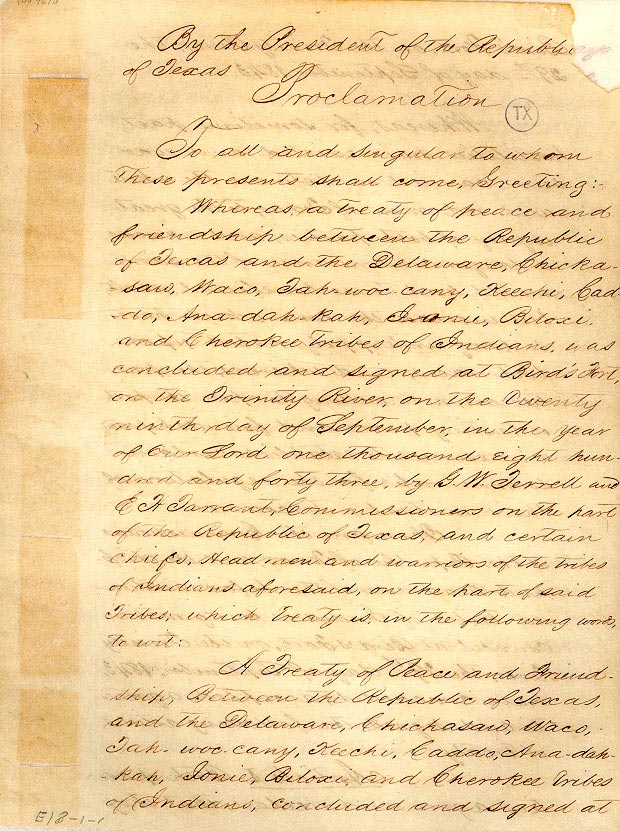
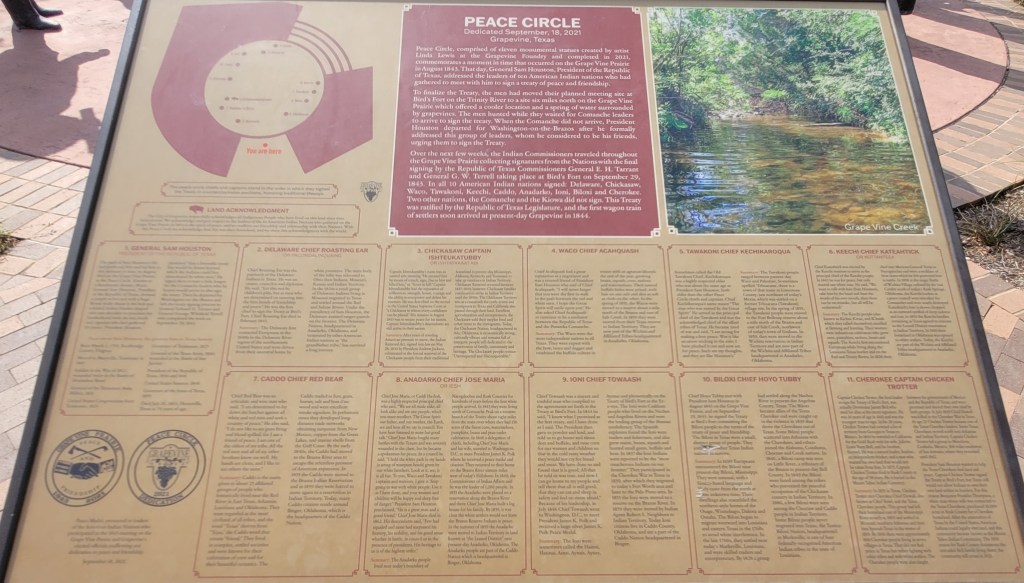
Having had many rich and illuminating conversations about the numerous treaties that the Choctaw entered into with the US government during the 1800s, we reflected amidst the sculptures representing the Chickasaw Captain, Ishtayakaat Abi, the Waco Chief, Acahquash, the Cherokee Captain, Chicken Trotter, and other tribal leaders. Although designed to enshrine Indigenous sovereignty, and intended to bring peace amongst nations, this treaty – like so many others – was not honoured in full. Records show that by settlers began to arrive into what is modern-day Grapevine by 1844.
Aspects of the installation caught our eye, and we were glad to see both a land acknowledgement on main interpretative panel, as well as detailed information about the signatories.
And, when wandering between the ‘Peace Circle’ and the Grapevine Convention and Visitors Bureau, we also found drawings of the tribal leaders by the Grapevine artist, Roger Mayhew (Choctaw/Cherokee).
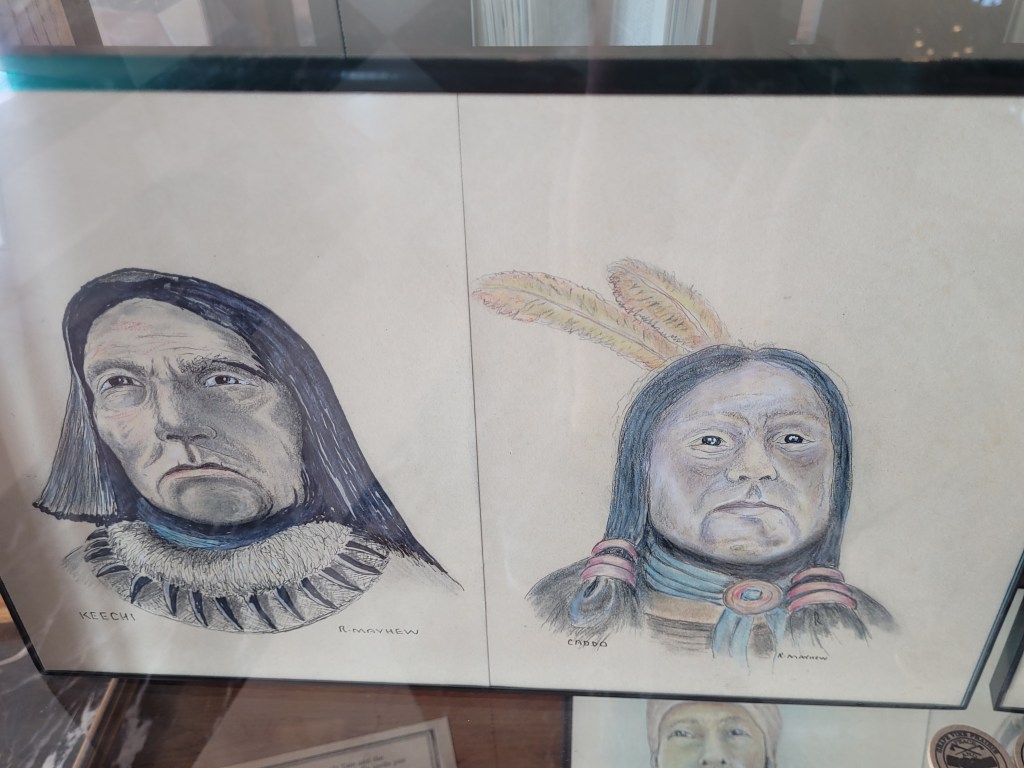
In the final event, the opportunity to stand beside Red Bear, Hoyo Tubby, and the others, and consider the fact that the monument acknowledges “that this was their homeland,” seemed like a fitting way to conclude what had been an altogether amazing trip. We’d just suggest that the people of Grapevine – who wish to “share…[the] acknowledgment with the world” – ought to have used the present tense when phrasing their words; ‘this is the homeland of these great leaders’ ancestors’ would be more fitting, we’d respectfully suggest.
 Sharing Lands
Leave a comment