Following on from Shelley Angelie Saggar’s comprehensive and compelling review of the Sharing Lands’s travels through Oklahoma in March 2026, Padraig Kirwan reflects here on moments of continuance, diplomacy, community-building, and intergenerational connectedness that occurred during the trip.
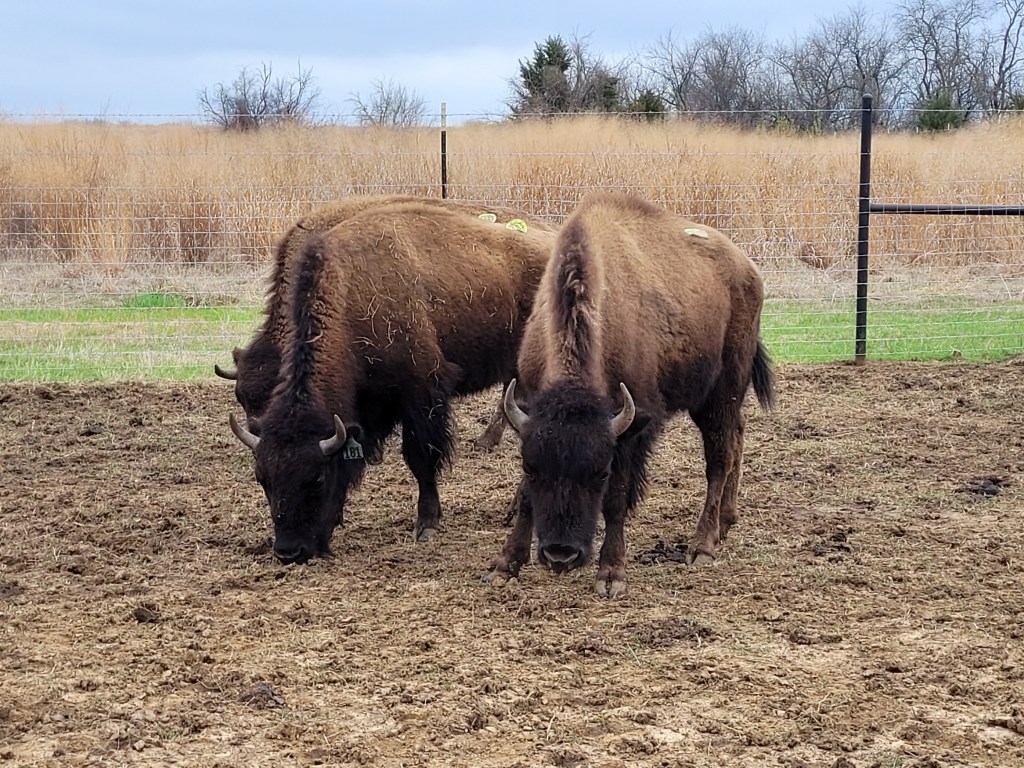
As with so many of our previous visits, our March tour of Choctaw Nation started at the Choctaw Cultural Center. There, we were fortunate to spend time with the Director of the Historic Preservation Department, Dr Ian Thompson, and Mr Ryan Spring (Tribal Historic Preservation Officer). Graciously taking time out of an immensely busy schedule, Ian joyfully introduced us to a number of the bison – “yvnnvsh” in the Choctaw language – that have taken up residence at the Center. He reminded us of these animal’s importance to the tribe not just in terms of their being a vital food source, but also in terms of their being at the heart of certain aspects of tool and weapon making, as well as the provision of shelter; bison bones, tendons, and hides were used by the Choctaw dynamically and daily. Ian also explained how the absence of incisors on bison’s upper jaws also meant that they were naturally prevented from overgrazing the native grasses that are a vital part of the ecosystem in Oklahoma and throughout the region. They do, however, graze it to the point where wildflowers eventually proliferate over time, and pollinators – and much more – benefit. Ryan has described the yvnnvsh as “stewards” of the prairie, and spoke compellingly about the ways in which their presence at the Center today is both a reflection and a sign of Choctaw continuance and hope for the future.
That sense of vigour and hope were effortlessly summoned and sustained on our trip to the Puterbaugh Upper Elementary School in McAlester, Oklahoma a few days later. Part of a packed itinerary organised to celebrate the proposed twinning of Midleton, Ireland (home to the famed ‘Kindred Spirits’ memorial), and McAlester, the school visit was truly one of the many highlights of our trip (Shelley can be quoted as saying “That was the best day yet” on several, successive, occasions!) Ms Ashley Cragg, Director of Indian Education at McAlester Public Schools, along with her colleagues and pupils, provided a massive and incredibly warm welcome to the Irish delegation that visited as part of the plans for the twinning.
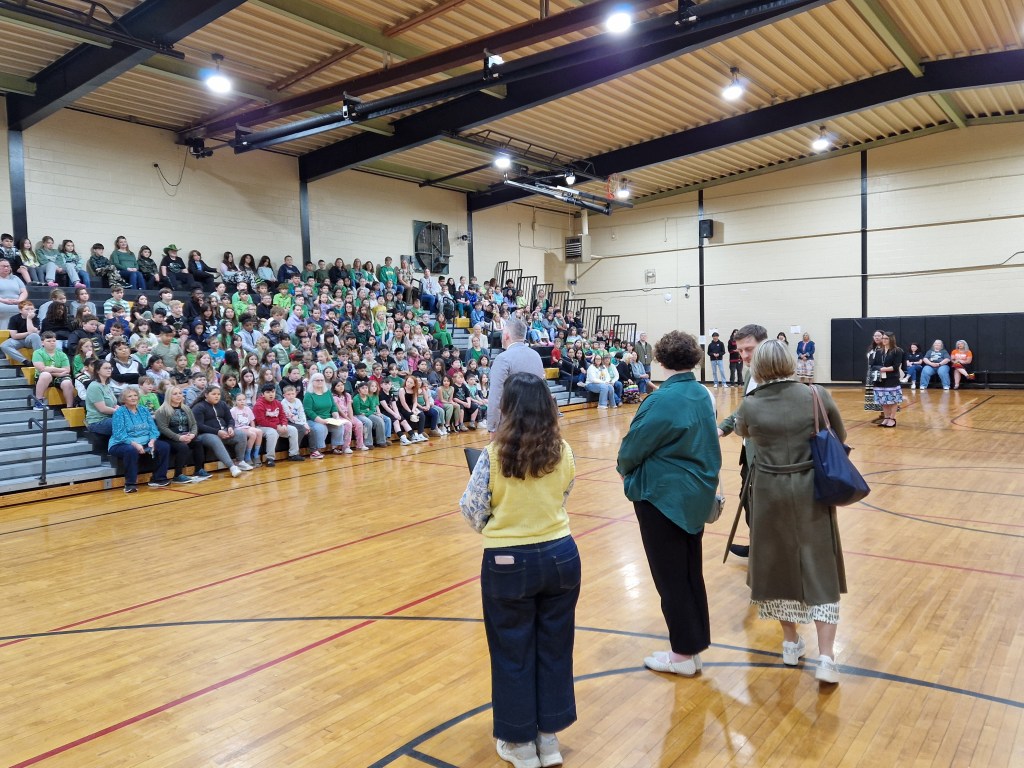
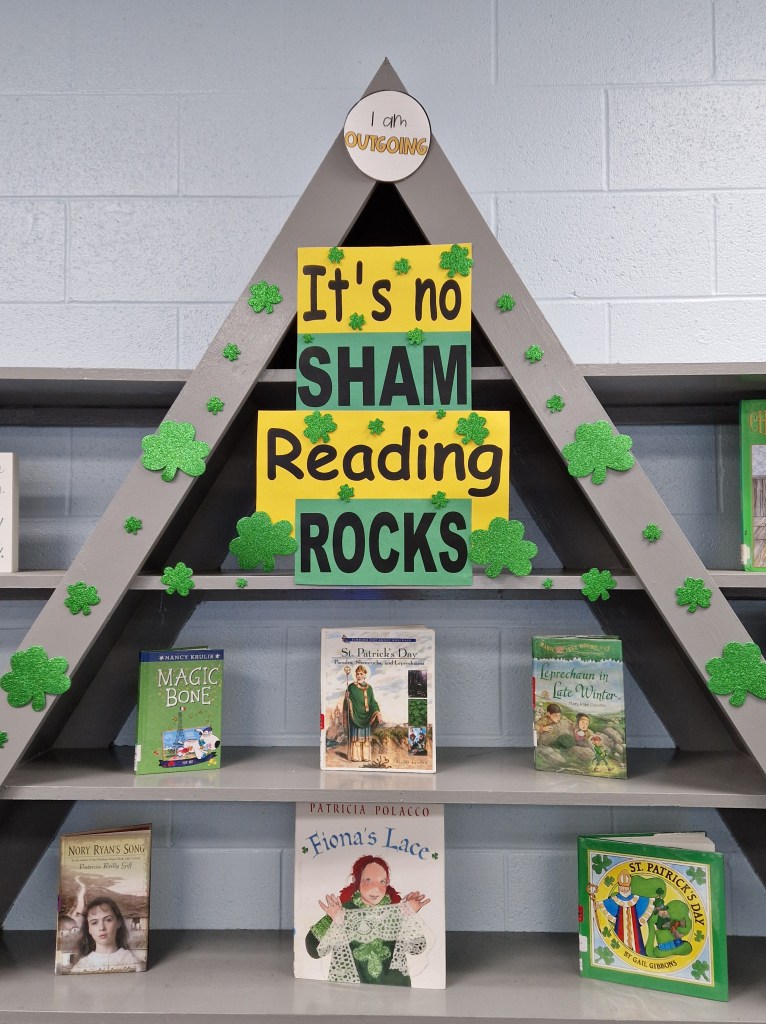
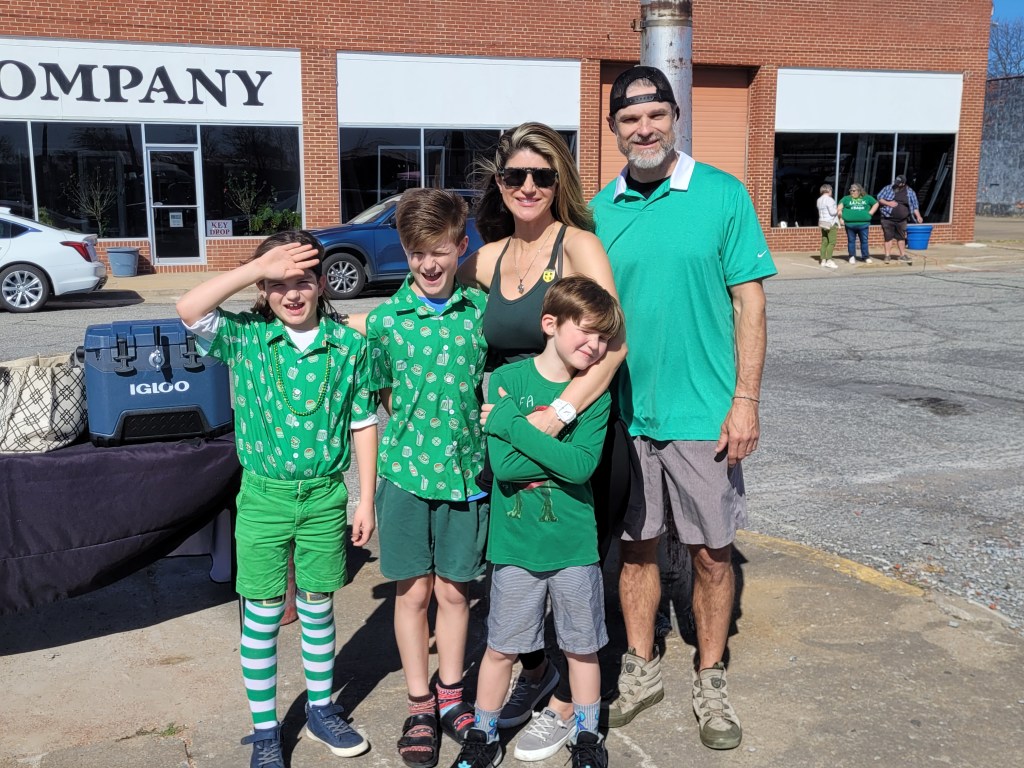
The group was led by Councillor Rory Cocking (East Cork Municipal District Chair), and included Councillor Ann Marie Ahern (Deputy Chair) and Eileen Coleman (District Manager), who have been working tirelessly on the Midleton and McAlester connection. For their part, the pupils at Puterbaugh were bedecked in shades and styles of green that saw them wearing everything from shamrock-covered t-shirts to green sneakers. And their wonderful signage reminded all of us of some important life lessons (“Reading is no sham – it rocks!”)
All the while, they smiled and celebrated the fact that our nations and our communities continue to share stories and connections. Mayor Justin Few, along with his colleagues Adrian O’Hanlon III and the team in MAGIC, have drawn on diplomatic and international relationships in their planning. The planning is hugely meaningful and serves a powerful purpose; it reminds us of affiliations and intercultural networks over centuries and continents. Indeed, in a piece that will be shared via our project’s website, Ms Cragg has spoken about the fact that “this connection isn’t just historical” but it is, rather, “alive.”
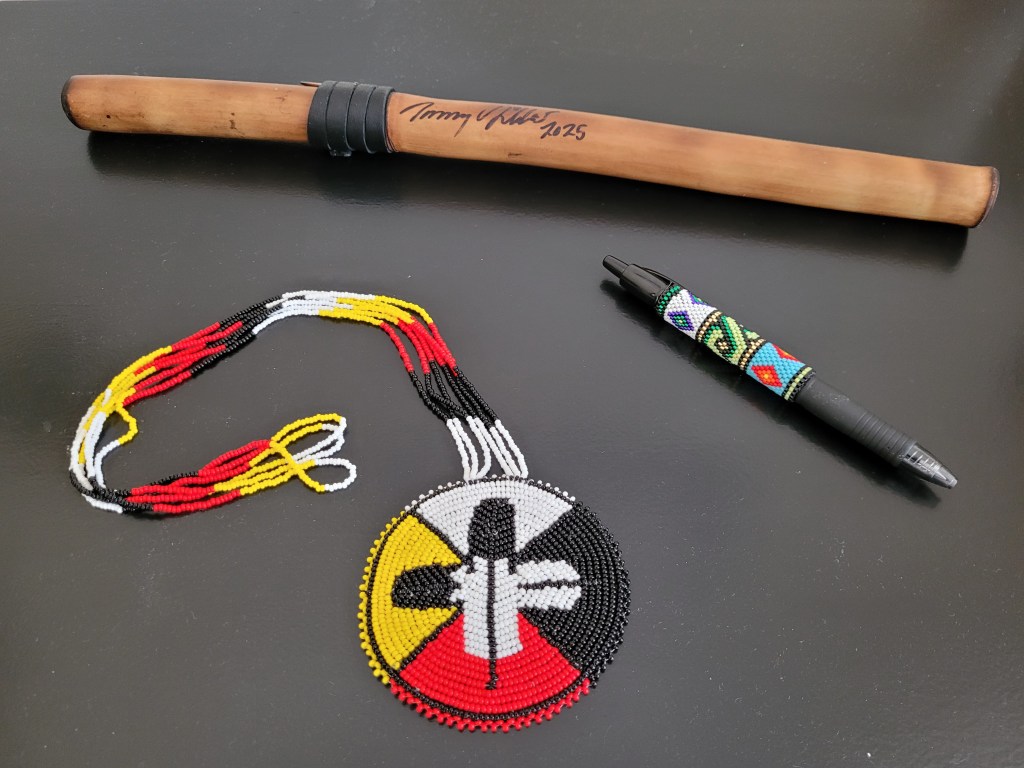
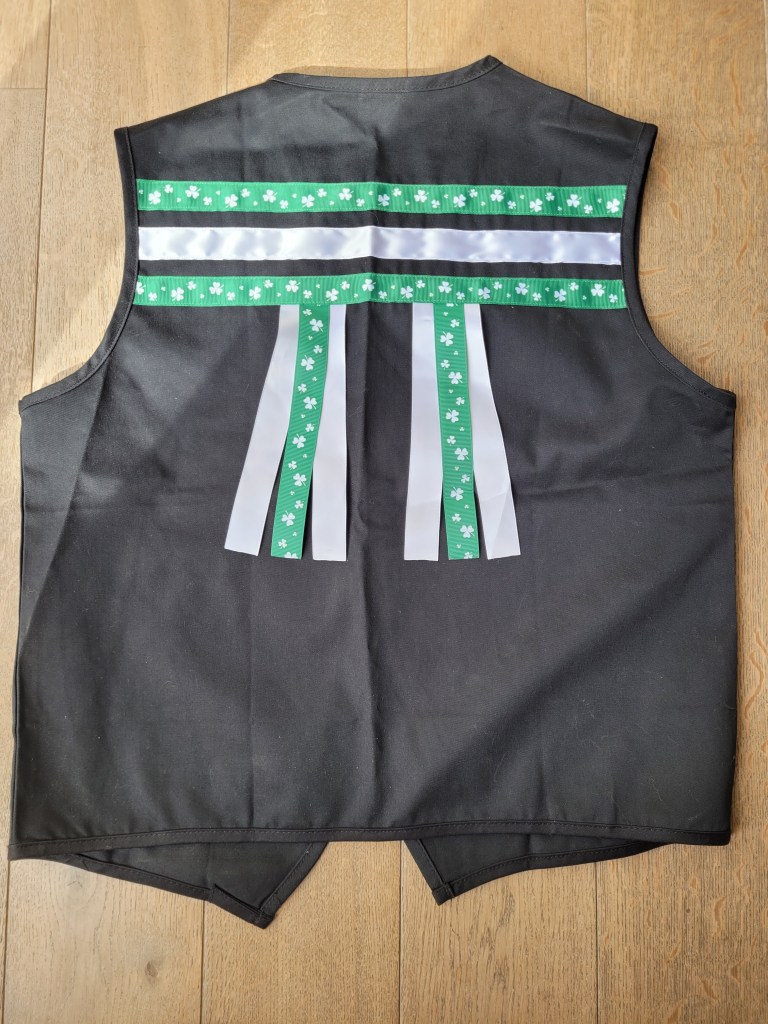
Living traditions and moments of gifting were honoured and brought to mind at the end of our visit to Puterbaugh, when the East Cork Municipal delegates and the Sharing Lands team were presented with beautiful beaded medallions and pen slips (the latter being a reminder to keep on writing, perhaps). These were beaded by students Cruz Wolf and Calista Factor, and the bead work was coordinated by Ms Chewelah Fry (Chickasaw) and Ms Cragg. We were also presented with ribbon vests that were artfully crafted by Sheila Cochran (Muskogee Creek). These came complete – and resplendent! – with shamrock fringing. Finally, we had the privilege of being gifted a Tommy Wildcat original: a stunning, signed flute made by the Cherokee musician himself. The generosity shown was greatly appreciated.
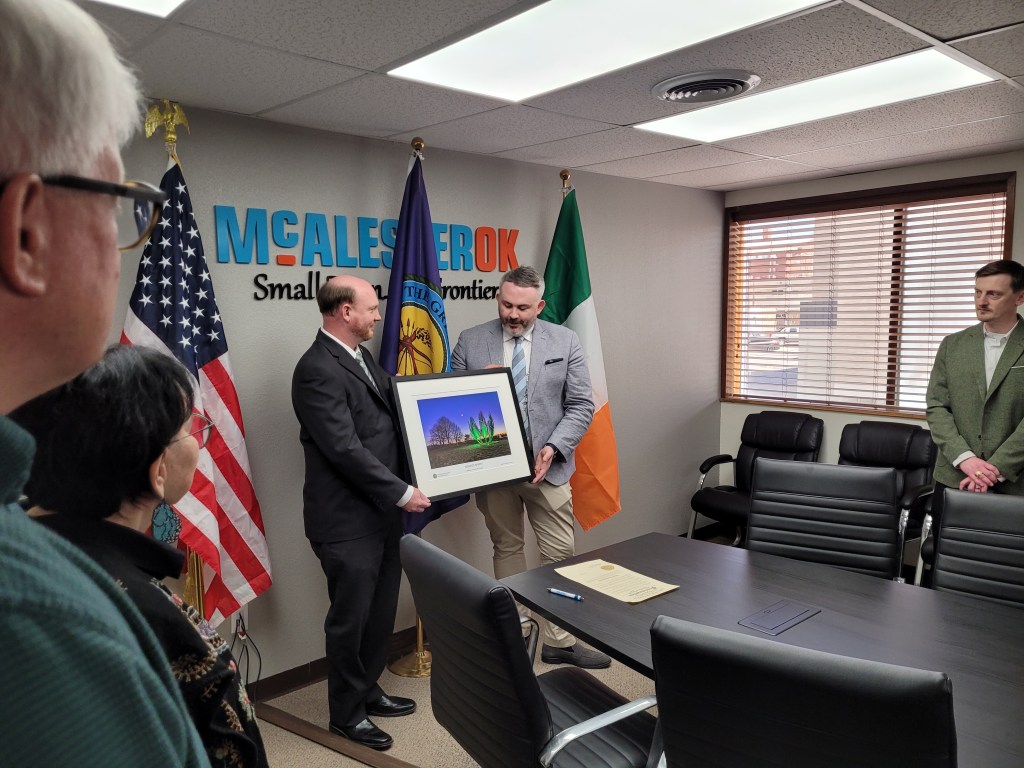
The afternoon brought a visit to the McAlester City Hall, where the proclamation of intent for the twinning of McAlester and Midleton was signed. Professor LeAnne Howe, the Sharing Lands’ International Co-Investigator, and her husband Dr Jim Wilson, joined Shelley and me in witnessing the official signing as well as the speeches made by Mayor Few and Councillor Cocking.
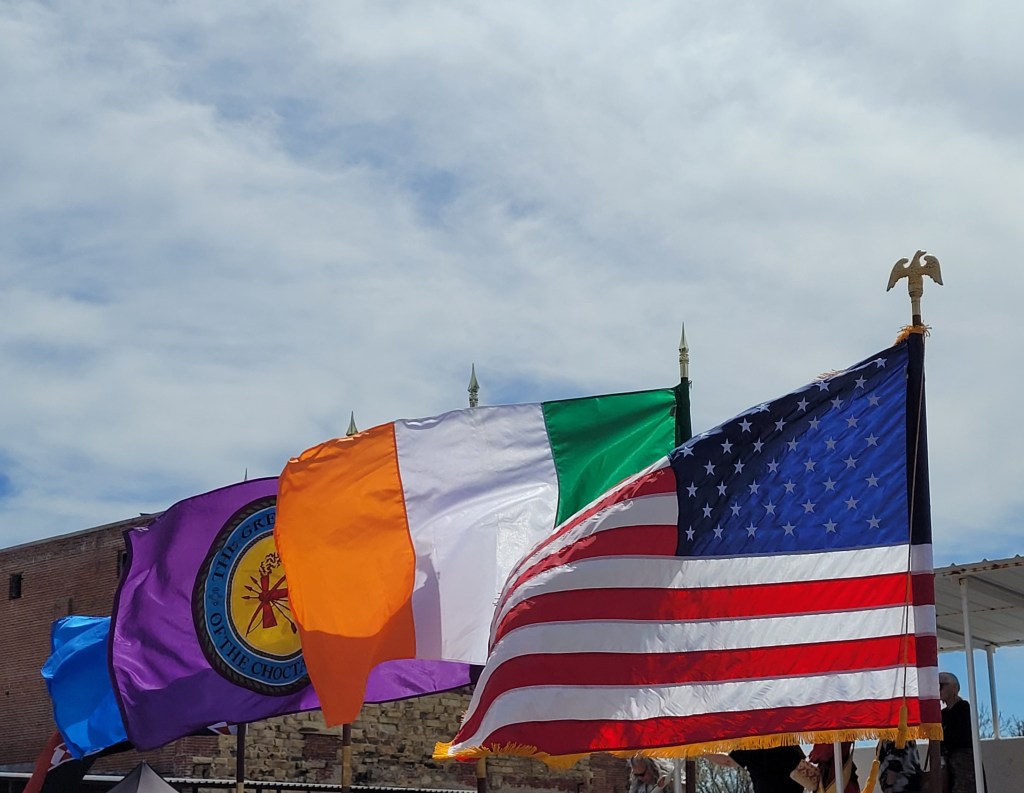
The following day, both dignitaries were heading up the McAlester-Midleton Friendship Parade that was timed to coincide with McAlester’s St Patrick’s Day Festival. It was wonderful to meet so many of the pupils and staff from Friday’s visit at the parade, where we joined Ryan Spring in hosting the information table dedicated to the Choctaw-Irish connection. Many conversations were had, several stories were swapped, and the ceol (Irish music) drifted across from the Spaceship Earth Coffee shop. We were fortunate enough to have representatives from the Choctaw Nation of Oklahoma and the Chahta Foundation join us on the information table. Teh advocacy and insights offered by Ms Angela Palmer (Executive Director of the Foundation), Ms Claire Green Young (Public Arts Manager, Choctaw Nation Communications Division, and former recipient of the Choctaw-Ireland Scholarship), and Ms Skylee Glass (also a former recipient of the Choctaw-Ireland Scholarship) never fail to inspire the project team. The opportunity to host these three guests in McAlester was one that we relished, and we’re grateful to Angela, Claire, and Skylee for spending time with our research team, members of the public, and several truly engaged and interested Puterbaugh students on the day.
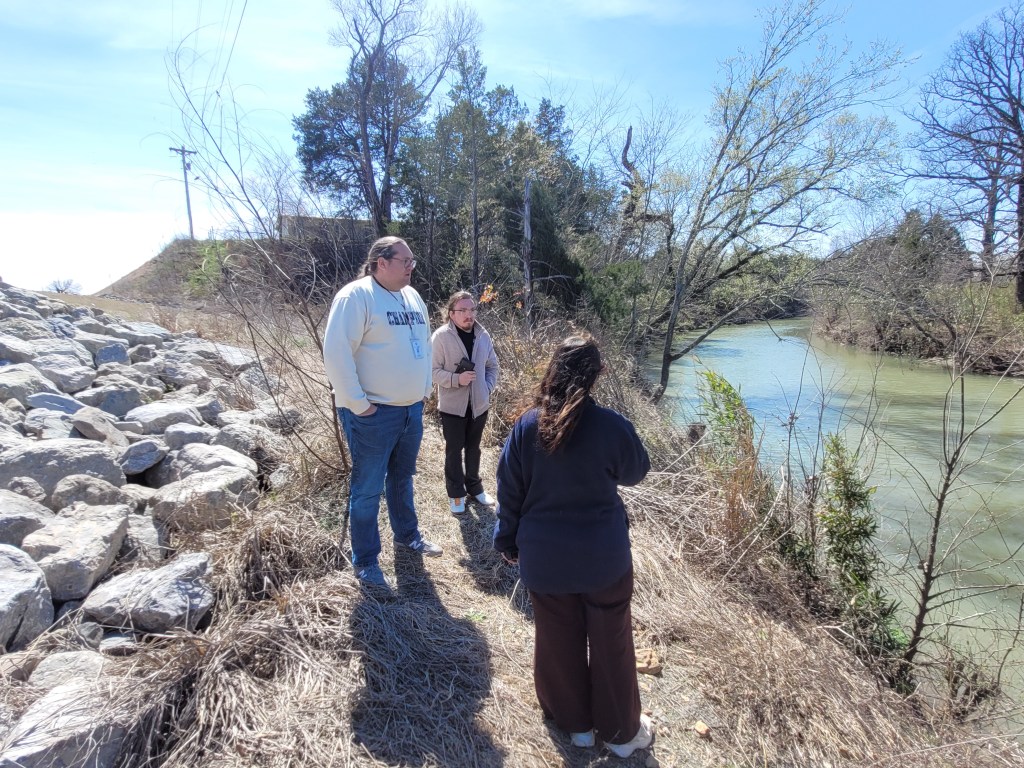
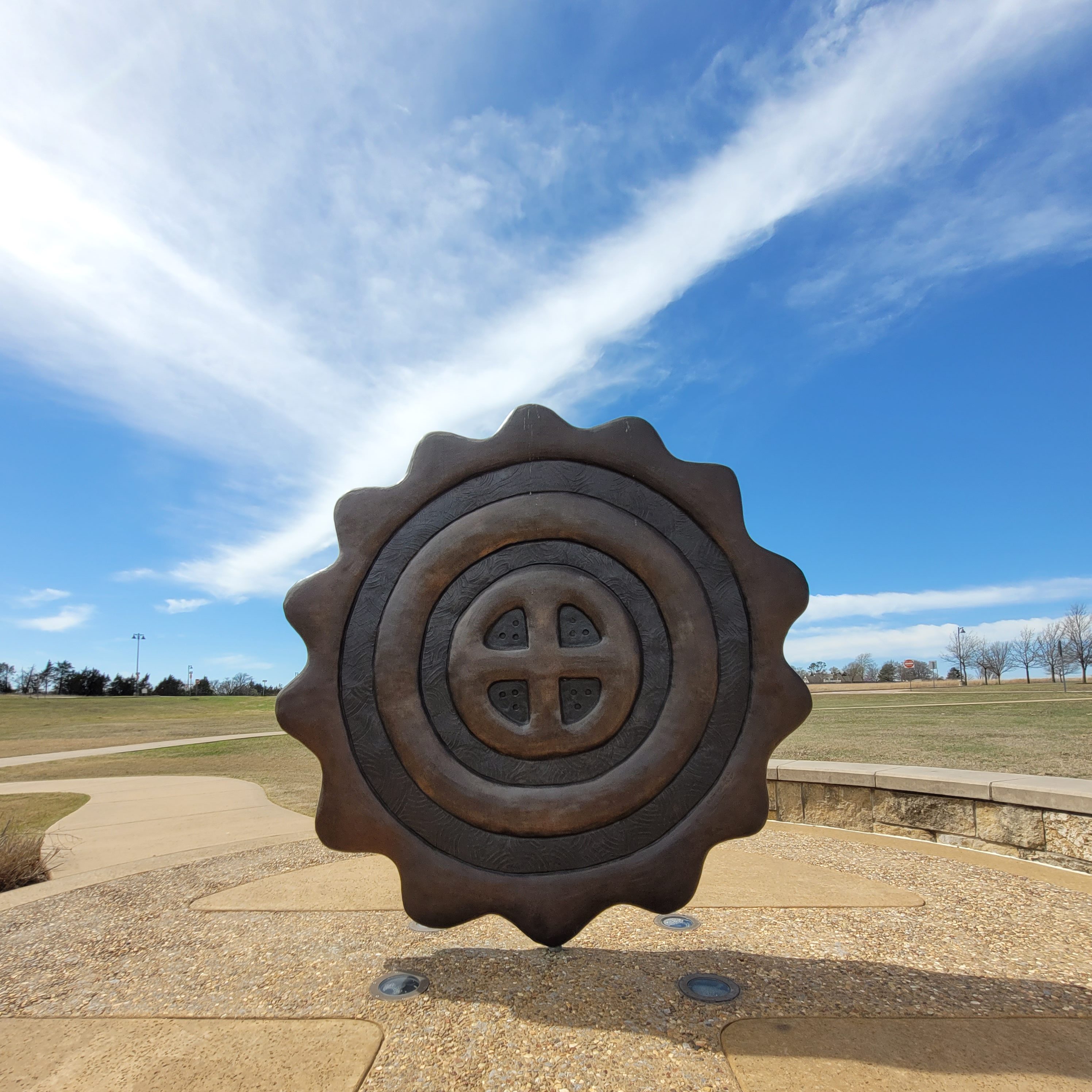
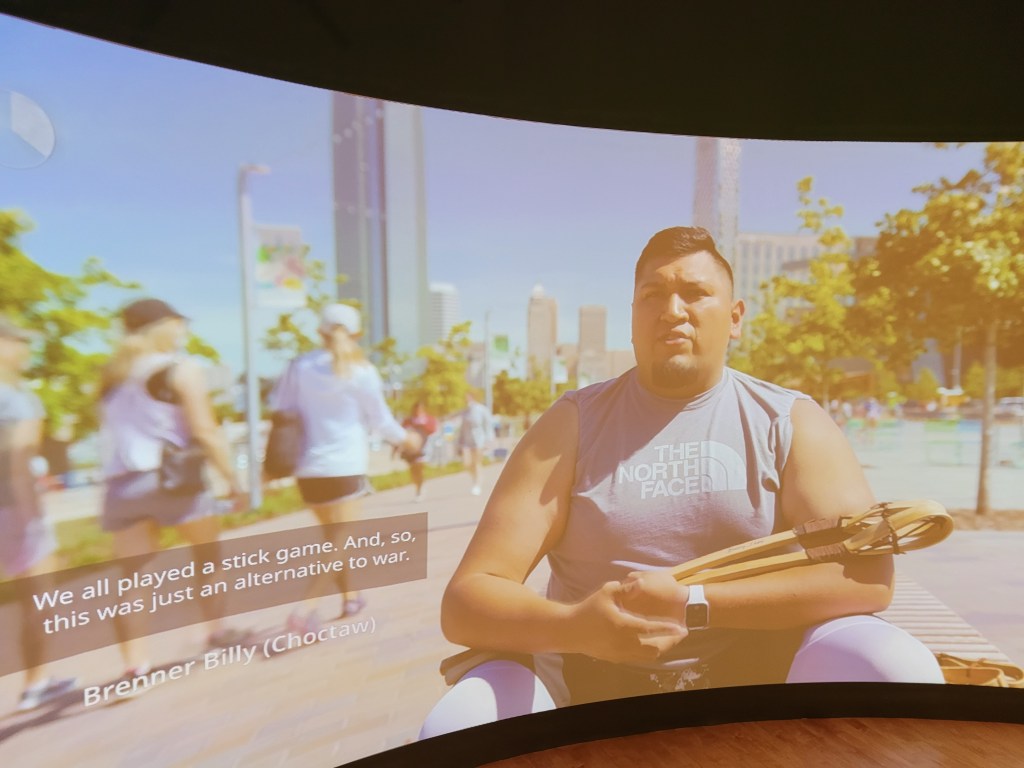
These moments at the Cultural Center and in McAlester provided a foundation for the remainder of the trip, and served to enrich and contextualise the experiences that followed. The sense of the ‘living gift’ that Ms Cragg alludes to was with us throughout, whether it was: walking through the Choctaw Capitol grounds and the countryside around Talihina (again in the company of Mr Spring and Mr Reno Crims, who is Curator at the Choctaw Capitol Museum, Tvskahomma); visiting the Chickasaw Cultural Center in Sulphur, OK; or spotting friends and colleagues in the video presentations at the First American Museum (Dr Candessa Tehee, [Cherokee Nation], Professor Joy Harjo [Muskogee Creek], Mr Brenner Billy [Choctaw], and many others). Our March trip was built on an enduring relationship and brought new understandings and exchanges.
 Sharing Lands
Leave a comment