Back in April 2025, the Sharing Lands team visited the Brooklyn Museum to see Jeffrey Gibson’s When Fire Is Applied to a Stone It Cracks. The title of the work is inspired by an Irish phrase, and the piece, by artist Jeffrey Gibson, who is of Ani’-Yun’wiya (Cherokee) and Chahta (Mississippi Band of Choctaw Indians) descent, encapsulates the enduring relationship between the Choctaw Nation and the people of Ireland that our project seeks to explore in greater depth.
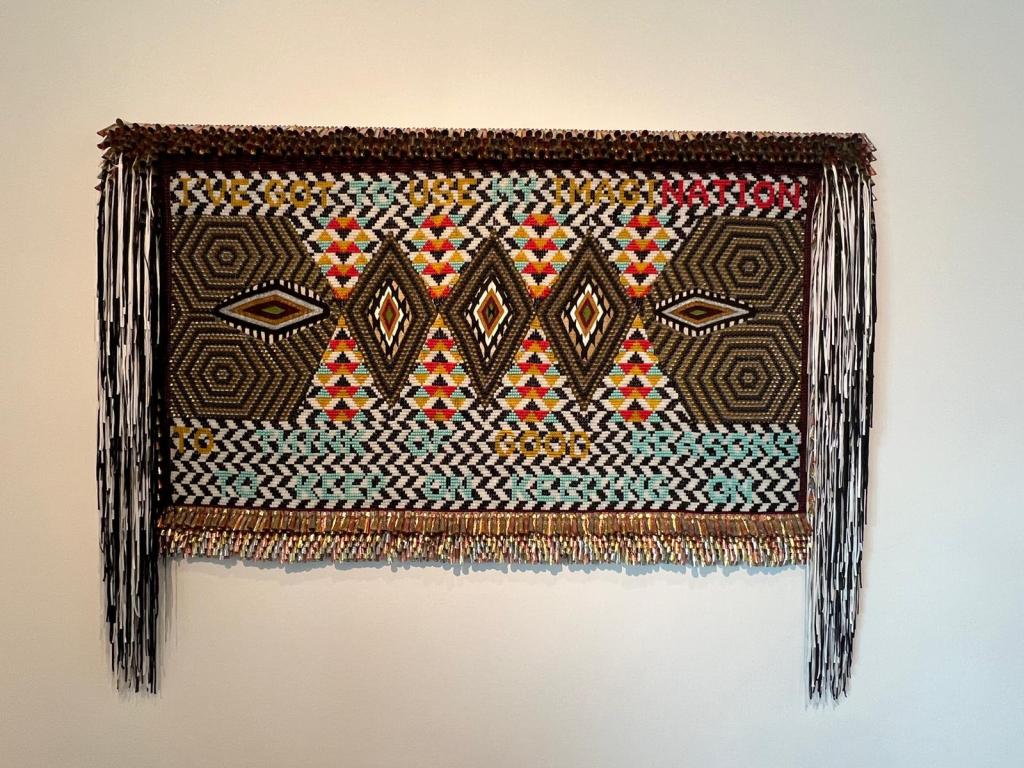
More recently, we travelled to Yorkshire Sculpture Park (YSP) to encounter more of Gibson’s work as part of Hold to This Earth, an exhibition bringing together contemporary Indigenous North American artists from the Tia Collection. It runs until 18 April 2027 and is well worth a visit.
The exhibition had many connections with our project, particularly its focus on the relationships between land, people and memory – themes that are central to both our research and our thinking. Bringing together sculpture, ceramics, photography, painting and film, the exhibition explored histories of colonialism and displacement, as well as questions of identity, belonging and connection to place.
Several works by Jeffrey Gibson were on display. Gibson frequently incorporates beadwork, fringing and clothing inspired by powwow dance regalia into his work. Music and poetry are also recurring sources of inspiration. One of the works at YSP, Like a Hammer, references the civil rights anthem If I Had a Hammer, written by Pete Seeger and Lee Hays. As with his work at the Brooklyn Museum, Gibson brings together different cultural references and histories to create work that is both visually striking and deeply political.
The exhibition features work by 40 artists, and there was plenty to inspire and provoke thought. The work of Wendy Red Star (Apsáalooke [Crow]), for example, reflects on the ways in which colonisers used photography to create and reinforce visual stereotypes. Red Star worked with photographs taken in the 1880s to document a Crow delegation that travelled to Washington, DC, to discuss their land and rights. She added handwritten notes in red ink over the original images, providing information about the individuals pictured, their clothing, hairstyles and histories.
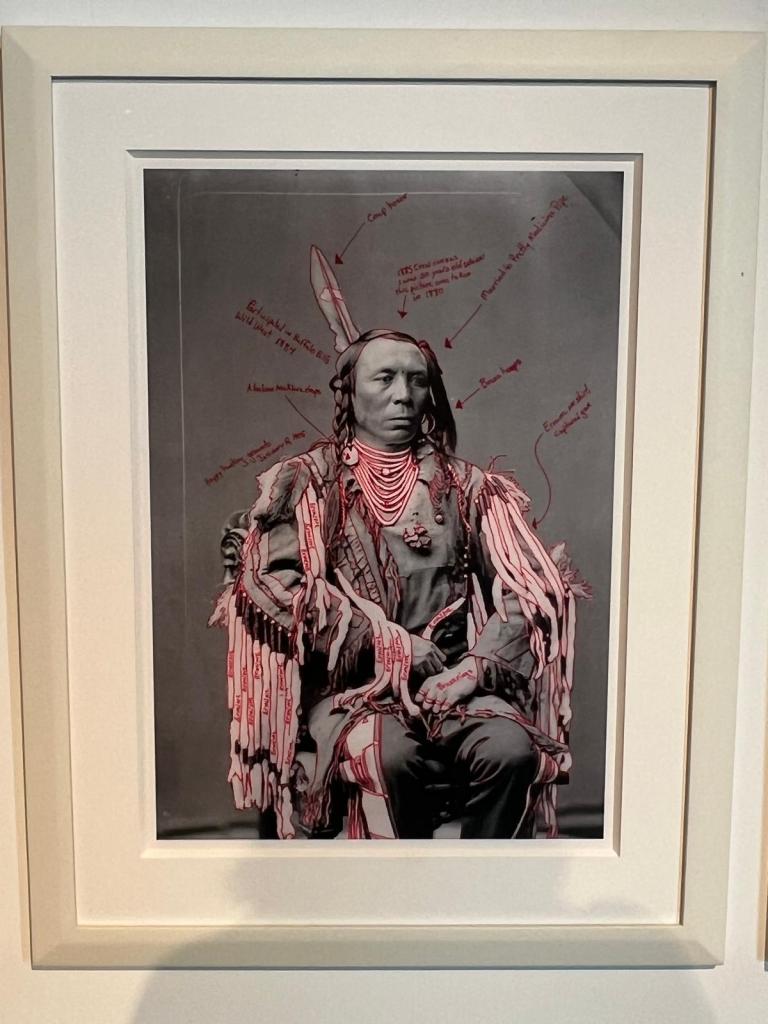
By adding this context, Red Star creates a much fuller representation of the people depicted and reconnects individuals with their communities, places and material culture. Her work also highlights how the meaning of objects can change when they are removed from their original context – an issue that many museums around the world continue to grapple with today.
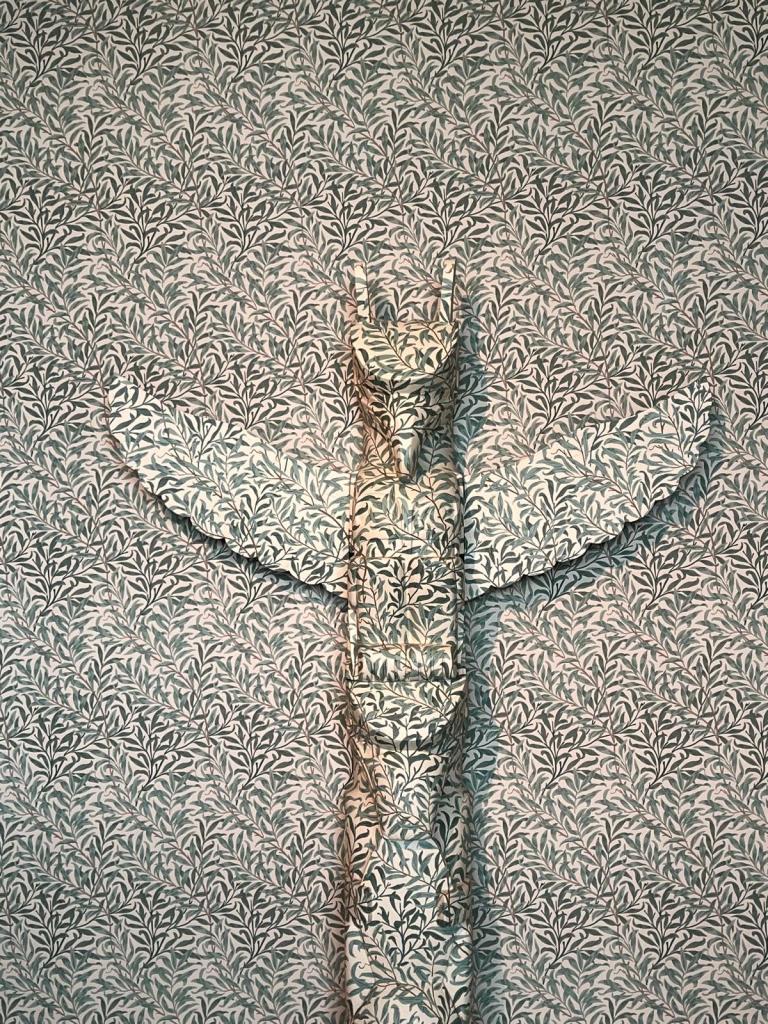
Another striking work was a carved totem covered in William Morris wallpaper by Nicholas Galanin (Lingít, Unangax̂). The work draws attention to the ways Indigenous culture is copied, mass-produced and sold for profit, often with little or no connection to the people and communities whose culture is being represented.
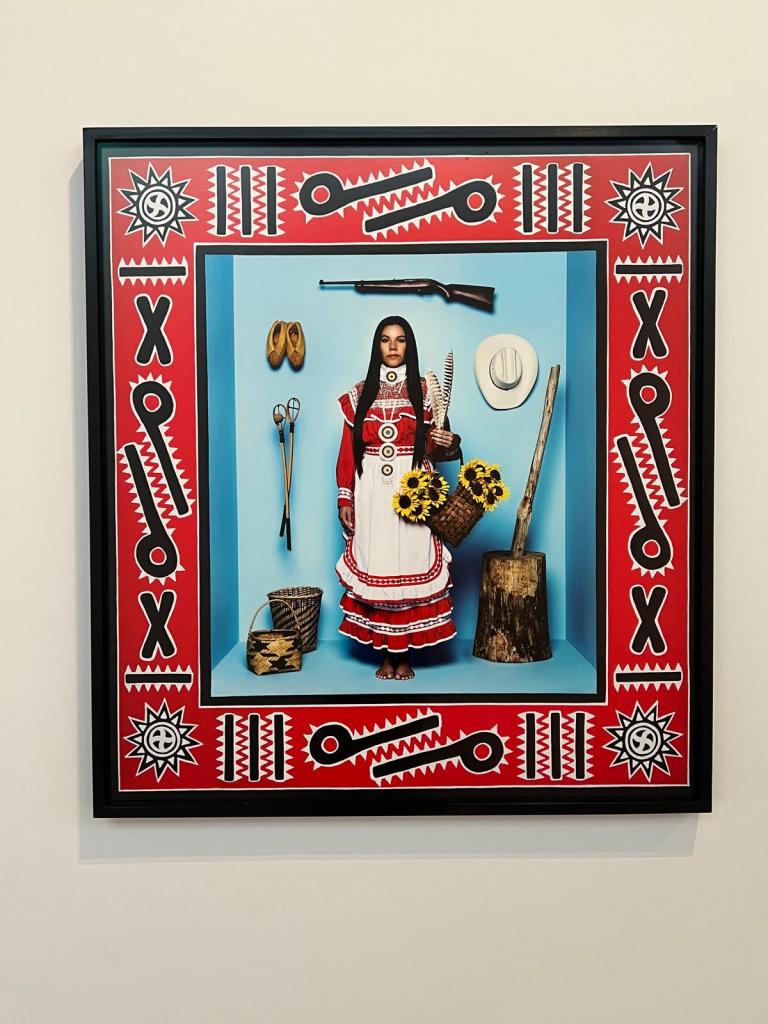
Cara Romero (Nüwü [Chemeheuvi]) also explores questions of representation through a series of photographs inspired by the American Girl dolls, reimagining them as Indigenous women. One of the works features objects associated with the Choctaw Nation, including woven baskets, stickball sticks and ball, and beaded jewellery. The photographs offer an opportunity to consider who gets to be represented, how cultures are portrayed and the significance of the objects through which cultural identity is expressed.
We left Hold to This Earth inspired by the work we had encountered and by the artists’ determination to address serious and complex questions around decolonisation, environmentalism, memory and belonging while creating art that is beautiful, powerful and meaningful. For the Sharing Lands team, the exhibition offered plenty of connections to our own research and a reminder of the many ways in which art can help us think differently about the relationships between people, place and history.


Leave a Reply